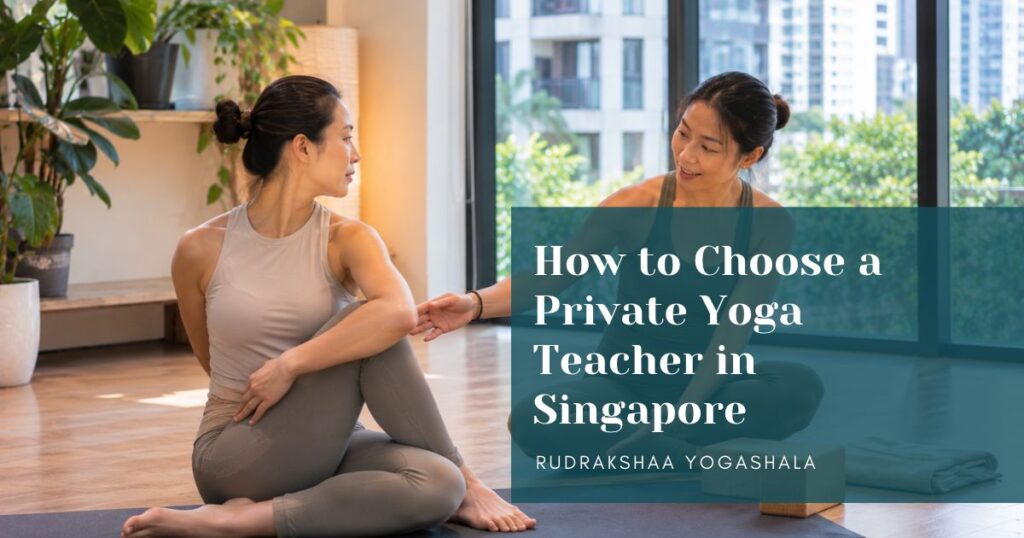

Private yoga sessions give you something a group class cannot: a teacher whose full attention is on you. Every posture, breathing practice and sequence can be adapted to your body, your goals and your schedule, which makes private yoga one of the most effective ways to learn safely and progress steadily.
In Singapore, private yoga teachers range from newly certified freelancers to highly experienced practitioners with decades of training. Rates, styles and approaches vary widely, so choosing the right teacher takes some care. Knowing what to look for will help you find someone who genuinely suits your needs.
What Are Private Yoga Sessions?
Private yoga sessions are one-to-one or small group classes in which a qualified teacher designs each session around the individual student. Sessions usually last 60 to 90 minutes and can take place at a studio, in your home, at your condo gym or online. The teacher adapts postures, breathing practices and meditation to your level, health and goals.
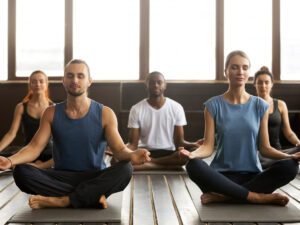
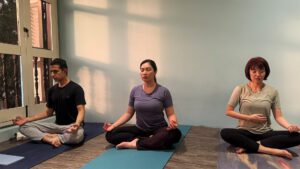
A private session can also include a couple, a family or a few friends practising together. These semi-private sessions keep much of the personal attention of one-to-one teaching while sharing the cost.
Unlike a group class, where the teacher has to pitch the session to the whole room, a private teacher can slow down, explain the reasoning behind each practice and correct alignment in detail. This is especially valuable in the early stages of practice, when habits are formed. Many of the 12 common yoga mistakes beginners make start in this early stage.
Who Benefits Most from Private Yoga Sessions?
Private yoga sessions benefit beginners who want a safe foundation, people managing injuries or health conditions, those with specific goals such as stress relief or better sleep, and busy professionals who need flexible timing. They also suit people who feel self-conscious in group classes or want to deepen an existing practice.
Beginners. Learning correct alignment and breathing from the start helps prevent injury and builds confidence before joining group classes.
People with injuries or health conditions. Back pain, knee problems, high blood pressure, pregnancy and recovery from illness all call for careful adaptation that is difficult to provide in a busy group class.
Busy professionals. Sessions can be scheduled early in the morning, at lunchtime or in the evening, at home or online, to fit around long working hours. Companies can arrange similar sessions for teams through traditional yoga programmes for modern workplaces.
People seeking specific outcomes. Whether the goal is managing stress, improving sleep, building strength or preparing for teacher training, a private teacher can design a programme around it.
What Qualifications Should a Private Yoga Teacher Have?
A private yoga teacher should have at least a 200-hour yoga teacher training certificate, ideally from a Yoga Alliance Registered Yoga School, and preferably further training such as a 300 or 500-hour certification. Look for several years of teaching experience, first aid certification and, where relevant, specialist training in areas such as therapeutic, prenatal or restorative yoga.
Certification sets a minimum standard, but experience matters even more in private teaching. Working one-to-one requires the ability to assess a student’s body, recognise limitations and adapt practices safely, skills that develop over years of teaching. Restorative yoga and similar gentle formats are where this skill matters most.
If you have a specific health condition, ask whether the teacher has experience working with it. A teacher who has helped many students with lower back pain, for example, will understand which postures to adapt and which to avoid.
How Do You Know If a Teacher’s Style Suits You?
A teacher’s style suits you if their approach matches your goals, pace and personality. Ask which style they teach, such as Hatha, Vinyasa, Ashtanga or Yin, and how they structure a typical session. A short trial session is the best way to find out whether their teaching, communication and energy feel right for you.
Different styles offer quite different experiences. Traditional Hatha yoga balances postures with pranayama, meditation and relaxation, making it well suited to stress relief and steady progress. Vinyasa is more dynamic and flowing, while Yin and restorative yoga focus on long, passive holds and deep rest. The wider differences between styles are explained in traditional yoga vs modern yoga.
Communication style matters as much as yoga style. Some students respond well to detailed technical instruction, while others prefer a gentler, more intuitive approach. A good private teacher will ask how you like to learn and adjust accordingly.
How Much Do Private Yoga Sessions Cost in Singapore?
Private yoga sessions in Singapore typically cost around S$100 to S$200 per hour for one-to-one teaching, depending on the teacher’s experience, the location and the session length. Highly experienced or specialist teachers may charge more. Semi-private sessions for two to four people often cost less per person. Prices change frequently, so check with each teacher or studio directly.
Several factors influence the price:
Experience and specialisation. Teachers with advanced training or therapeutic expertise usually charge higher rates.
Location. Home visits often cost more than studio sessions because they include travel time.
Packages. Many teachers and studios offer packages of five or ten sessions that reduce the cost per session.
Session length. Sessions of 75 or 90 minutes are priced higher than 60-minute sessions but allow more time for breathing and relaxation.
When comparing options, consider what is included. A slightly higher rate with an experienced teacher who designs a personalised programme often delivers far more value than a cheaper session that resembles a standard class.
Should You Choose Home, Studio or Online Private Yoga?
Choose home sessions for maximum convenience and privacy, studio sessions for a calm, dedicated space with props and equipment, and online sessions for flexibility and lower cost. Each option works well, and many students in Singapore combine them depending on their schedule.
Home sessions. The teacher comes to your home or condo facilities, saving you travel time. You need a quiet space large enough for a mat, and the teacher usually brings props.
Studio sessions. A studio offers a dedicated, distraction-free environment with mats, blocks, bolsters and straps. Many students find it easier to switch off away from home.
Online sessions. Online private yoga offers the most flexibility and suits people who travel frequently. The teacher can still observe and correct you, provided your camera is positioned so your whole body is visible.
Which Questions Should You Ask Before Booking?
Before booking a private yoga teacher in Singapore, ask about their training and years of experience, the style they teach, how they assess new students, their experience with any health conditions you have, their rates and packages, their cancellation policy and whether they offer a trial session. Clear, specific answers are a good sign of a professional teacher.
A good teacher will also ask you questions. Expect to be asked about your health history, injuries, previous yoga experience and goals before the first session. A teacher who skips this step is not tailoring the practice to you, which defeats the purpose of private yoga.
It is also worth asking how the teacher tracks progress. Some provide simple home practice routines between sessions, which can greatly accelerate results.
Conclusion
The right private yoga teacher combines solid training, real teaching experience and an approach that matches your goals and personality. Taking time to check qualifications, ask questions and try a session before committing will help you find a teacher who supports your practice safely and effectively over the long term.
At Rudrakshaa Yogashala in Singapore, private yoga sessions are rooted in traditional Hatha yoga and tailored to each student, combining postures, pranayama and meditation. Sessions can be arranged at the studio or online, and many students also join the studio’s regular classes once they have built a strong foundation. Get in touch to arrange a first session.
Frequently Asked Questions
Are private yoga sessions worth the cost?
For many people, yes. Private sessions offer personal attention, faster progress and a safer practice, particularly for beginners and those with injuries. Even a short course of private sessions before joining group classes can build a strong foundation.
How often should I have private yoga sessions?
Once or twice a week is a good rhythm for most students. Weekly sessions combined with short home practice usually produce steady progress. Some people book private sessions monthly to refine their practice alongside group classes.
Can private yoga help with back pain?
Private yoga can help many people manage back pain by strengthening supporting muscles, improving posture and reducing tension. A teacher can adapt each posture to your condition. If your pain is severe or recent, speak with a doctor before starting.
Can I share a private yoga session with a friend or partner?
Yes. Most teachers offer semi-private sessions for two to four people, which reduce the cost per person. The teacher can still give individual attention, though sessions work best when participants have similar levels and goals.
What should I prepare for a home yoga session?
Clear a quiet space large enough for a yoga mat with room to stretch your arms. Wear comfortable clothing and avoid eating a heavy meal for two hours beforehand. Most teachers bring props, but check in advance.