
High blood pressure is something a lot of people manage quietly for years before it becomes an urgent problem. Exercise is recommended. But intense exercise raises blood pressure acutely, which makes some people understandably nervous about where to start. Hatha yoga in Singapore is increasingly part of how clinicians and patients approach this – and the evidence for it is more solid than the wellness industry framing might suggest.
Can Hatha Yoga Lower Blood Pressure?
Yes, Hatha yoga has been shown to reduce both systolic and diastolic blood pressure in people with hypertension. A review published in the World Journal of Cardiology found that yoga interventions produced significant reductions in blood pressure compared to non-exercise controls, with the effects most consistent in slow, breath-focused styles – which describes Traditional Hatha yoga.
A widely cited study from PMC examining yoga’s effect on hypertension found that 12 weeks of regular practice produced an average reduction of 4 to 5 mmHg in systolic pressure and 3 to 4 mmHg in diastolic. Those numbers are clinically meaningful – comparable to the effect size of a low-dose antihypertensive medication in some presentations.
The mechanisms involved include reduced sympathetic nervous system activity, lower resting heart rate, improved baroreceptor sensitivity, and reduced circulating cortisol. All of these respond to the specific things Hatha yoga does well: slow breathing, held postures, and deliberate rest. The breath component in particular is worth understanding on its own terms, since pranayama is doing much of the physiological work here rather than the postures alone.
Why Is Hatha Yoga Safer Than Other Exercise for High Blood Pressure?
Hatha yoga is safer for hypertension than most conventional exercises because it lowers blood pressure during practice rather than spiking it. Unlike running, cycling, or resistance training – which cause significant acute blood pressure rises during effort – slow Hatha practice keeps cardiovascular demand low while producing parasympathetic activation that reduces both heart rate and vascular resistance.
This matters because blood pressure management isn’t just about the resting numbers. People with hypertension often show exaggerated blood pressure responses to exertion, which creates cardiovascular risk in the acute exercise window. Hatha yoga’s low-effort approach avoids this while still producing the training adaptations that lower resting pressure over time.
Traditional Hatha yoga in Singapore, taught in the slower, more breath-integrated style, is particularly appropriate here. Fast-paced or heated yoga styles present more cardiovascular demand and are less suitable as a starting point for people managing blood pressure. Styles that blend traditional pacing with more structured sequencing, such as progressive Hatha fusion, can offer a middle ground once a student is comfortable with the basics and wants a bit more structure without raising cardiovascular demand.
Which Yoga Poses Are Safe for Hypertension?
The safest yoga poses for hypertension are gentle standing poses held at a moderate depth, supine and seated postures that keep the head at or above heart level, forward folds with adequate prop support, and restorative postures that emphasise breath and relaxation.
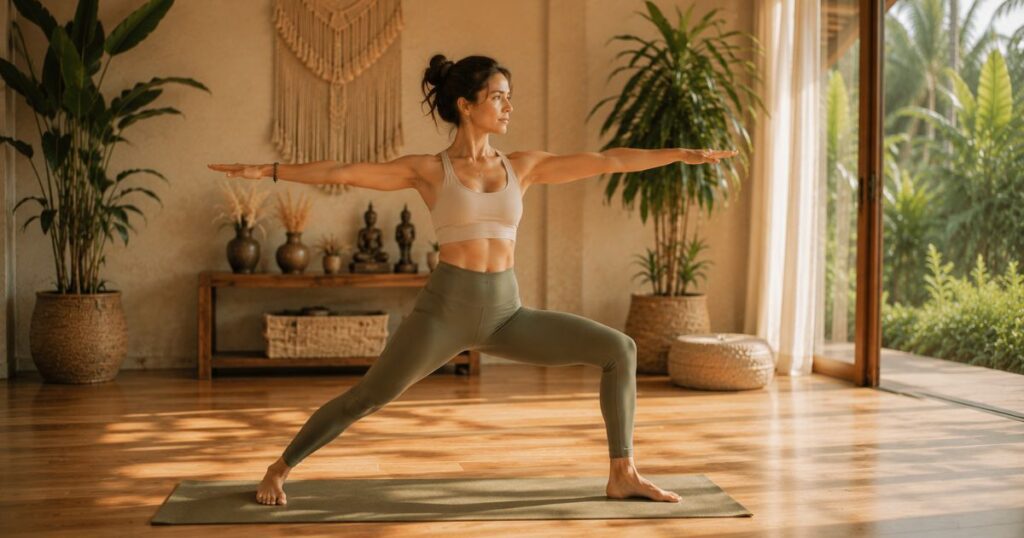
Mountain Pose and Warrior variations
Mountain Pose and Warrior variations practiced at a moderate stance, without extreme muscular effort, are well-tolerated and build lower body strength without cardiovascular spikes.
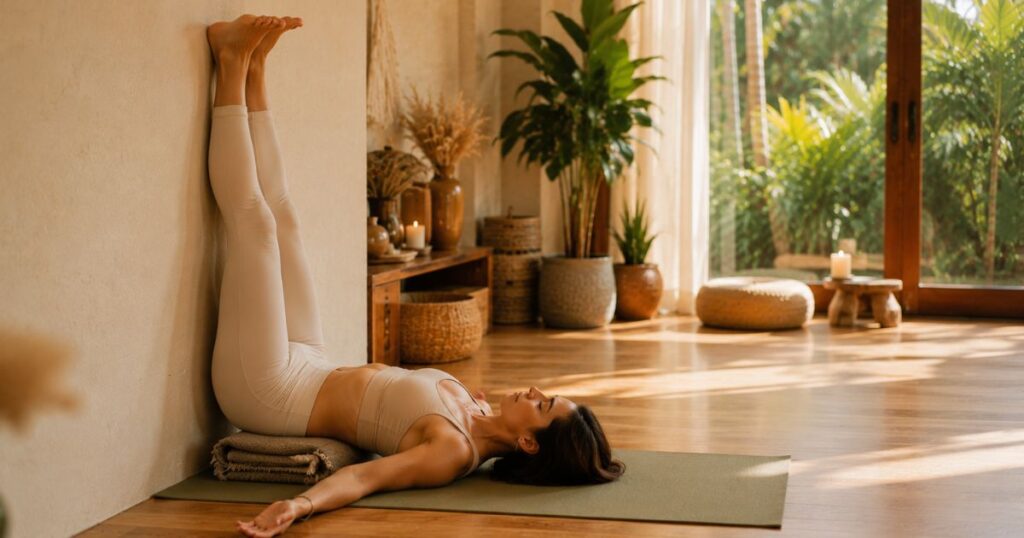
Legs Up the Wall
Legs Up the Wall is one of the most recommended postures for blood pressure management. The mild inversion reduces peripheral vascular resistance and activates the baroreflex system, which helps regulate blood pressure downward. It should be held for 5 to 10 minutes with steady breath. It’s worth noting that this is a mild, supported version of basic inversions rather than a full inversion practice, which matters for the contraindications covered below.
Supported Child’s Pose
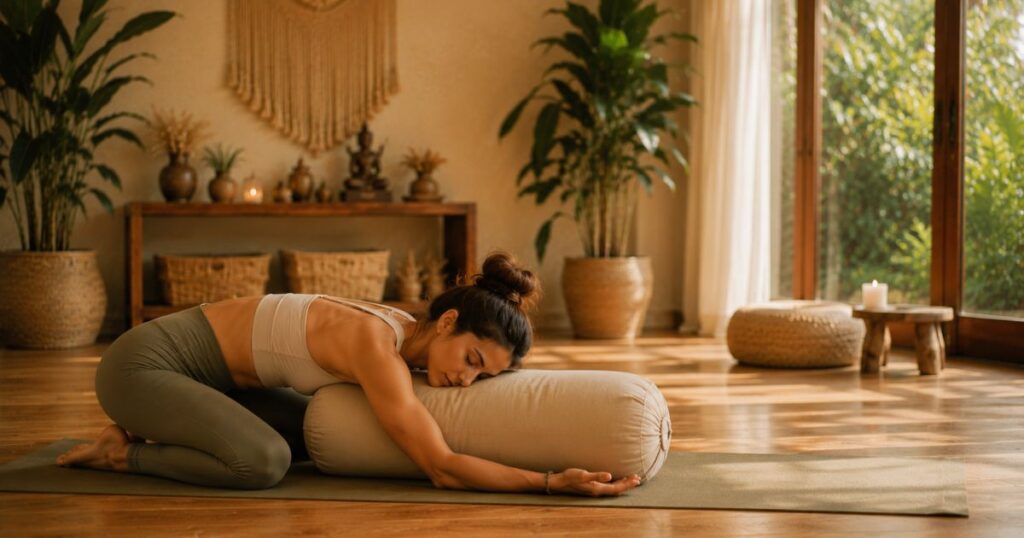
Supported Child’s Pose with a bolster reduces sympathetic tone and allows complete muscular release – one of the most effective postures for acute blood pressure reduction in a single session.
Seated forward folds
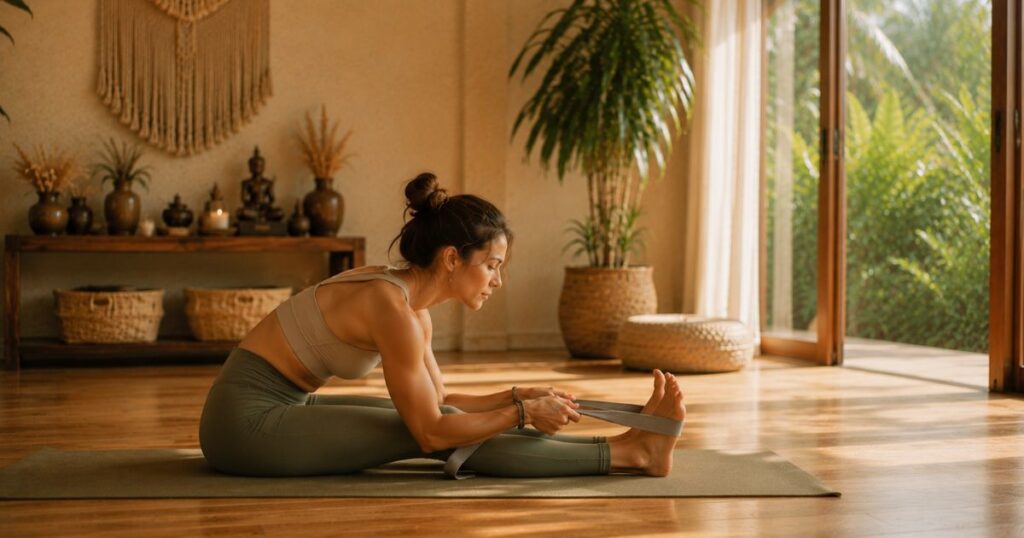
Seated forward folds with a strap keep the effort manageable while producing the vagal activation that comes from forward flexion and breath focus.
What Yoga Poses Should People with Hypertension Avoid?
People with hypertension should avoid strong inversions where the head drops significantly below the heart, including Headstand, Shoulder Stand, and Plow Pose. Understanding the difference between these fuller inversions and the supported, mild variations mentioned above is genuinely important here – the contraindication applies to the former, not the latter. They should also avoid breath retention (kumbhaka), intensive pranayama techniques like Kapalabhati, and any pose that requires maximal muscular straining or held muscular effort.
The reason inversions are contraindicated relates to blood pressure physiology. When the head drops below the heart, blood pools toward the brain. In a healthy person, baroreceptors adjust quickly. In someone with hypertension – particularly uncontrolled hypertension – this creates a risk of a dangerous pressure spike that the regulation system may not compensate for adequately.
Breath retention creates a Valsalva effect – a sharp increase in intrathoracic pressure that pushes blood pressure up rapidly. This is the same mechanism that makes straining on the toilet risky for people with cardiovascular concerns. In yoga practice, this means any pranayama involving prolonged holds should be avoided until blood pressure is well controlled. By contrast, gentler cooling techniques like Sitali pranayama don’t involve retention and are generally better tolerated, though they should still be introduced under guidance rather than self-taught.
How Quickly Does Hatha Yoga Lower Blood Pressure?
Most studies show measurable blood pressure reductions after 8 to 12 weeks of consistent Hatha yoga practice, attending three to five sessions per week. Some individuals see earlier improvement, particularly in the stress-related component of their hypertension, but 8 weeks is a reasonable minimum expectation before assessing whether the practice is producing the desired effect. This stress-related pathway overlaps closely with what’s covered in how yoga helps with stress and the nervous system, since much of hypertension’s day-to-day fluctuation is driven by the same sympathetic activity. Students looking for a simple starting sequence outside of class can also work through 6 yoga poses to calm the nervous system, several of which overlap directly with the safe postures listed above.
The effect is not permanent without continued practice. Like most non-pharmacological interventions for blood pressure, the benefit is maintained by ongoing practice rather than a finite course of treatment. Students who stop practicing consistently tend to see their blood pressure return toward baseline within a few months. This is consistent with the broader pattern seen in how yoga in Singapore transforms lives more generally – sustained results tend to track sustained practice, not a fixed course of sessions.
Conclusion
Hatha yoga is one of the better-evidenced non-pharmacological tools for blood pressure management, and it’s particularly accessible as a starting point for people who are cautious about vigorous exercise. The key is starting with the right style – slow, breath-focused, avoiding the contraindicated postures – and building consistency over months rather than weeks. If breath is genuinely the core mechanism at work, it’s worth spending time on core breathing techniques directly, ideally with guidance on which techniques are appropriate for a hypertensive nervous system and which aren’t.
At Rudrakshaa Yogashala, traditional Hatha yoga in Singapore is taught in small groups with enough teacher attention to modify practice for individual health conditions. If you’re managing hypertension and want to incorporate yoga safely, browse sessions or check the schedule, and get in touch before your first class so the teacher has what they need to look out for you properly.
Frequently Asked Questions
Should I tell my yoga teacher I have high blood pressure?
Yes, before your first class, not after. It takes 30 seconds and changes how a teacher watches you during practice. A good teacher will know which postures to modify, which cues to avoid, and when to suggest you come out of something early. If you’re in a class of 25 people where no one knows your situation, you lose that protection entirely.
Can yoga replace blood pressure medication?
No. Yoga is a complement to medical management, not a substitute for it. Some people with well-controlled, mild hypertension find that lifestyle changes, including yoga, reduce their need for medication over time – but that’s a conversation to have with your doctor, not a self-administered decision. Start both, not yoga instead.
Is hot yoga safe for hypertension?
Hot yoga is generally not recommended as a starting point for people with hypertension. The combination of heat, cardiovascular demand, and potential dehydration creates a less controlled blood pressure environment than standard Hatha practice. Once blood pressure is well managed and you have established a regular practice, this is a conversation to have with your doctor. As a first approach, stick to a non-heated setting.
How do I know if a pose is raising my blood pressure too much during class?
Symptoms to watch for include headache during or immediately after a pose, redness in the face or neck, lightheadedness, or a feeling of pressure in the head. Any of these is a signal to come out slowly, lie down if needed, and inform the teacher. Don’t push through these symptoms.
Is there a specific type of Hatha yoga that’s better for blood pressure?
Traditional, slow-paced Hatha that emphasises breath throughout is the most appropriate starting point. Restorative Hatha – which uses props extensively and holds postures for several minutes – is even more conservative and suitable for people whose blood pressure is currently uncontrolled or who are just starting. As the condition stabilises, a more active Hatha practice is appropriate.