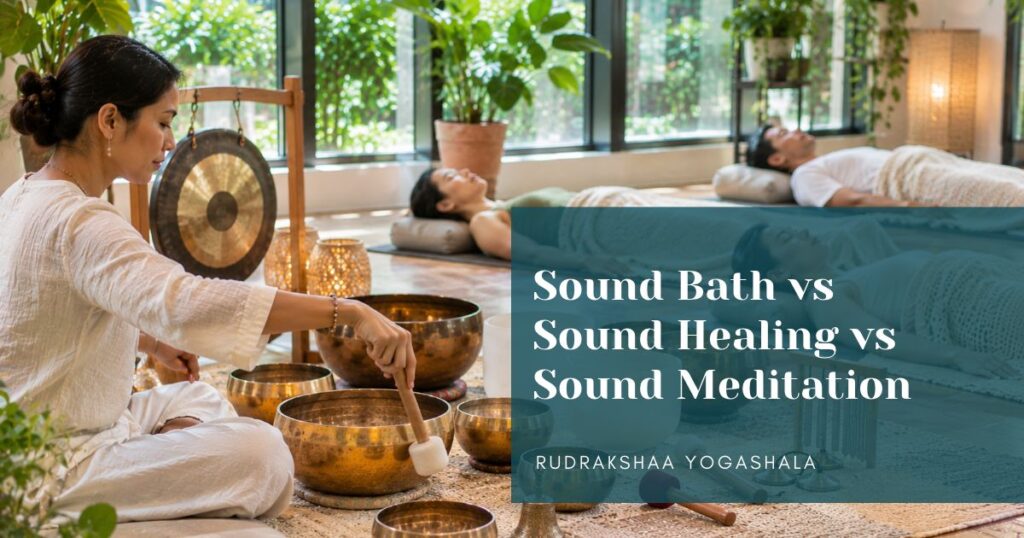

Sound bath, sound healing and sound meditation are often used as if they mean the same thing. Studio timetables, event listings and wellness websites in Singapore switch between the terms freely, which makes it difficult to know what you are actually booking.
The three practices are closely related. All of them use sound to calm the nervous system, and many sessions combine elements of each. There are, however, real differences in format, purpose and how involved you are, and understanding them will help you choose the session that suits your needs.
What Is the Difference Between a Sound Bath, Sound Healing and Sound Meditation?
Sound healing is the broad umbrella term for any practice that uses sound and vibration to support wellbeing. A sound bath is one specific form of sound healing, usually a group session in which you lie down and are immersed in sound. Sound meditation is a practice in which sound is used as a point of focus to train attention, and it often involves more active participation.
A simple way to think about it is that sound healing is the field, a sound bath is a format and sound meditation is a technique. A single session can include all three: a sound bath that begins with a short sound meditation, led by a practitioner trained in sound healing.
The differences matter most when you consider what you want from a session. If you want to rest, a sound bath is ideal. If you want a tailored, one-to-one experience, a sound healing session is better suited. If you want to build a skill you can practise on your own, sound meditation is the right choice.
What Is Sound Healing?
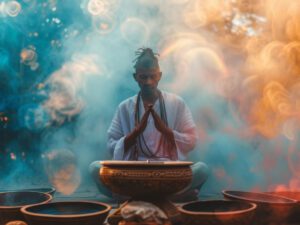
Sound healing is a practice that uses sound and vibration from instruments such as singing bowls, gongs, tuning forks and the human voice to relax the body and support emotional and physical wellbeing. It draws on traditions including Tibetan bowl practices, Indian nada yoga and Chinese qigong, and it is usually led by a practitioner trained in using sound therapeutically.
As an umbrella term, sound healing covers many formats, including group sound baths, private one-to-one sessions, singing bowl massage and gong therapy. In a private sound healing session, the practitioner may place bowls directly on or near the body so the vibration can be felt, and will often tailor the instruments and intensity to the individual.
Sound healing works primarily through the nervous system. Sustained tones and gentle vibration help the body shift out of the fight or flight state and into the parasympathetic rest and digest state, which lowers heart rate, slows breathing and eases muscle tension. It is a wellness practice rather than a medical treatment, and claims that it cures disease are not supported by research. The mechanism is explained in more detail in what sound healing is and how it works.
What Is a Sound Bath?
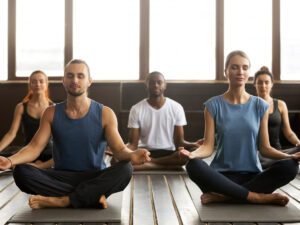
A sound bath is a form of sound healing in which participants lie down, usually in a group, and are surrounded or “bathed” in sound from instruments such as gongs, crystal and Tibetan singing bowls, chimes and drums. The participant’s role is entirely passive. You simply rest and listen while the practitioner plays, typically for 45 to 75 minutes. What a session feels like, and what it costs, is covered in sound bath in Singapore: what a session feels like and what it costs.
Sound baths are the most widely available sound practice in Singapore and the easiest place for beginners to start. They require no experience, no effort and no particular state of mind. Many people fall asleep, and that is perfectly fine. Our first-time sound bath etiquette guide covers how to prepare.
Because sound baths are usually group sessions, the practitioner plays for the room rather than for any one person. Instruments are generally placed around the space rather than on the body, and the experience is designed to be broadly relaxing for everyone present.
What Is Sound Meditation?
Sound meditation is a meditation practice in which sound is used as the object of attention. Instead of focusing on the breath, you focus on a tone, such as a singing bowl, a mantra or your own humming, following it until it fades and gently returning your attention whenever the mind wanders. It trains concentration and awareness as well as promoting relaxation.
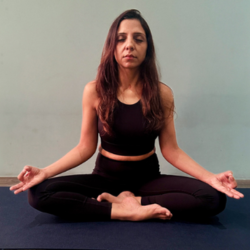
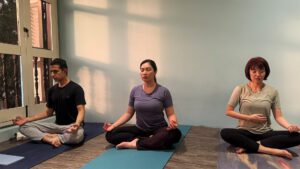
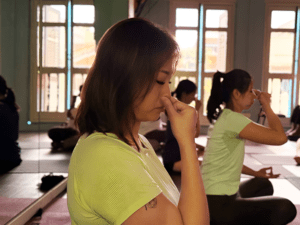
Sound meditation is usually more active than a sound bath. You may be sitting rather than lying down, and you may be asked to listen closely to a single bowl, chant a mantra such as “Om” or practise Bhramari pranayama (humming bee breath), which combines a long hum with a slow exhale.
The great advantage of sound meditation is that it can be practised anywhere. Once learned, a few minutes of humming or focused listening can be used at your desk, before sleep or during a stressful moment, without any instruments at all. Breath practices such as pranayama work in much the same way.
How Do the Three Practices Compare?
The three practices differ mainly in your level of participation, the format and the purpose. A sound bath is passive and focused on deep rest. Sound healing is an umbrella term that often refers to tailored, one-to-one sessions. Sound meditation is active and focused on training attention.
Your role. In a sound bath, you lie still and receive the sound. In a private sound healing session, you also receive, but the session is shaped around you. In sound meditation, you participate by listening closely, chanting or humming.
Format. Sound baths are usually group sessions. Sound healing sessions are often private, with instruments placed on or near the body. Sound meditation can be taught in groups or practised alone.
Purpose. Sound baths are designed for relaxation and stress relief. Sound healing sessions aim to address an individual’s specific needs, such as tension, poor sleep or emotional release. Sound meditation builds a skill you can use independently.
Cost. Group sound baths are the most affordable option. Private sound healing sessions cost more because of the individual attention involved. Sound meditation is often taught as part of yoga or meditation classes.
Which Sound Practice Is Right for You?
Choose a sound bath if you are new to sound practices, want to relax deeply and prefer not to do anything. Choose a private sound healing session if you have a specific concern, a health condition or prefer individual attention. Choose sound meditation if you want a practical tool for managing stress that you can use every day on your own.
Many people in Singapore begin with a group sound bath to experience how sound affects them. Those who find it helpful often move on to private sessions for a deeper experience, or learn sound meditation so they can bring the calm into their daily routine. The benefits of a sound bath are a good place to start reading.
People with epilepsy, tinnitus, pacemakers or metal implants, those in early pregnancy and anyone with a serious mental health condition should speak with a doctor first. A private session, where the volume and approach can be adjusted, is usually the safer option in these cases.
What Should You Look for When Booking a Sound Bath in Singapore?
When booking a sound bath in Singapore, check how the session is described, who is leading it and how many people will attend. Clear descriptions tell you whether you will be lying down and listening, having instruments placed on your body or actively meditating. An experienced practitioner and a small group usually make for a calmer, more supportive session.
Read the description carefully. Since the terms are used loosely, look for details about what you will actually do during the session.
Ask about the practitioner’s training. A well-trained practitioner will be able to explain the difference between the formats they offer.
Check the group size. Smaller groups are quieter and allow the practitioner to support anyone who needs it.
Be cautious of exaggerated claims. A trustworthy provider describes sound practices as tools for relaxation and wellbeing, not cures.
Conclusion
Sound healing is the broad practice, a sound bath is its most accessible group format and sound meditation is a technique you can carry into daily life. They overlap, and many sessions blend all three, but knowing the difference makes it much easier to choose the right experience for your needs.
At Rudrakshaa Yogashala in Singapore, sound is offered in several forms, including group sound baths, gong baths, Tibetan sound therapy and singing bowl massage, alongside breathwork and meditation rooted in traditional practice. If you are unsure where to begin, a group session is a gentle introduction, and a private session offers a more personal experience tailored to you. Upcoming sessions are listed on the What’s On page, or you can get in touch for advice.
Frequently Asked Questions
Is a sound bath the same as sound healing?
A sound bath is a type of sound healing, but not all sound healing is a sound bath. Sound healing also includes private sessions, singing bowl massage and gong therapy. A sound bath specifically refers to lying down and being immersed in sound, usually in a group.
Which is best for beginners?
A group sound bath is usually the best starting point for beginners. It requires no experience, no effort and no previous knowledge of meditation. Once you know how sound affects you, you can explore private sessions or sound meditation.
Can I do sound meditation at home?
Yes. Sound meditation is one of the easiest practices to do at home. You can focus on a recording of a singing bowl, chant a mantra, or practise humming bee breath for five to ten minutes. No instruments are needed to begin.
Do sound healers place bowls on your body?
In private sound healing sessions and singing bowl massage, bowls are often placed on or near the body so you can feel the vibration directly. In group sound baths, instruments are usually placed around the room instead. Always tell the practitioner if you would prefer no contact.
Which sound practice is best for sleep?
A sound bath is often the most effective for sleep, as it guides the brain into slower wave states associated with deep relaxation. Regular sound meditation before bed can also help. Many people find that combining a weekly sound bath with short evening practice gives the best results.