
A sound bath is one of the simplest wellness practices you can try. You lie down, close your eyes, and let the sound of singing bowls, gongs, and other instruments wash over you. There is nothing to learn and nothing to perform, which is a large part of its appeal for people who find meditation difficult. If you want the background first, read what sound healing is and how it works.
In Singapore, sound baths are now offered in yoga studios, wellness centres, hotels and even corporate offices, and the range of formats and prices can be confusing. Knowing what a session actually feels like and what you should expect to pay will help you choose one that suits you.
What Is a Sound Bath?
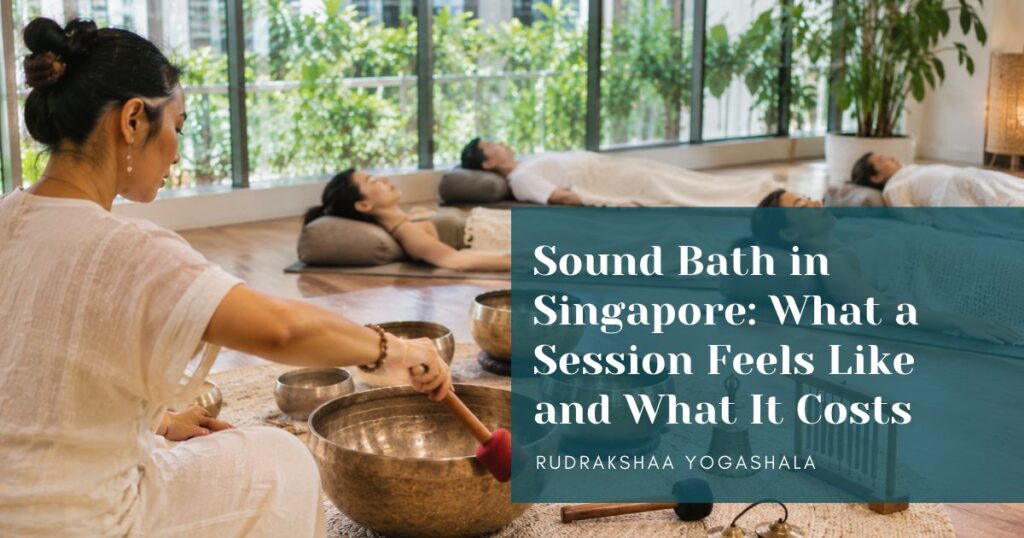
A sound bath is a guided relaxation session in which you lie down and listen to sustained tones from instruments such as Tibetan singing bowls, crystal bowls, gongs and chimes. The word “bath” describes the way the sound surrounds you. No water is involved. The aim is to calm the nervous system and guide the mind into a deeply relaxed, meditative state.
Unlike a concert, a sound bath has no melody to follow. The practitioner plays long, overlapping tones that rise and fade slowly, so the mind has nothing to analyse and gradually stops trying. How a sound bath differs from sound healing and sound meditation is explained in sound bath, sound healing or sound meditation.
Most sound baths in Singapore are group sessions led by a single practitioner, though private sessions are also available for individuals, couples and small groups.
What Does a Sound Bath Feel Like?
A sound bath usually feels deeply relaxing, heavy and slightly dreamlike. Most people notice their breathing slow, and their body sink into the mat within the first ten to fifteen minutes. Many describe feeling the vibration of the gong or bowls in their chest, drifting between waking and sleep, and feeling calm, light and clear afterwards.
The experience often moves through recognisable stages.
The first few minutes. The mind is usually still busy, running through the day’s tasks and messages. This is normal. The practitioner often begins with gentle breathing to help you settle.
The middle of the session. As the sound builds, many people stop following their thoughts. Some see colours or images, some lose track of time and some fall asleep. A gong played at full volume can feel intense and almost physical, before it fades back to quiet.
The final minutes. The sound becomes softer and sparser, followed by a period of silence. Many people find this silence one of the most powerful parts of the session.
Afterwards. Most people feel calm and slightly slowed down, sometimes sleepy. Occasionally, emotions surface during or after a session. This is a normal part of the nervous system letting go and usually feels like a release. Our first-time sound bath etiquette guide covers what to do after a session.
What Happens During a Sound Bath Session?
A typical sound bath in Singapore follows a simple structure: a short introduction, a few minutes of guided breathing, around 40 to 50 minutes of sound, and a period of silence before you slowly return. You lie on a mat with a cushion and blanket, and the practitioner moves between instruments placed around the room.
At the start, the practitioner will usually explain what to expect and ask whether anyone has health conditions they should know about. You then settle into a comfortable position, most often lying on your back with a bolster under your knees and an eye pillow if you like.
There is nothing you need to do during the session. You do not need to meditate, focus on anything or stay awake. At the end, the practitioner will invite you to move your fingers and toes, roll to one side and sit up slowly.
How Long Does a Sound Bath Last?
Most sound baths in Singapore last between 45 and 75 minutes, with 60 minutes being the most common length. This usually includes around ten minutes of introduction and breathing, the main sound journey, and a few minutes of silence at the end. Shorter 30-minute sessions are sometimes offered in corporate settings or at lunchtime.
An hour is a useful length because the nervous system needs time to shift into deep relaxation. Many people only fully let go after the first fifteen to twenty minutes, so very short sessions may not give the same depth of rest.
It is also worth arriving ten to fifteen minutes early. Rushing in from the MRT and lying down immediately makes it harder to settle.
How Much Does a Sound Bath Cost in Singapore?
A group sound bath in Singapore typically costs around S$35 to S$80 per session, depending on the venue, length and practitioner. Special events, such as full moon or candlelit sound baths, often cost more. Private sound bath sessions usually start from around S$150 and vary with the length of the session and the number of people. Prices change often, so check each provider directly.
Several factors affect the price:
Venue. Sessions in hotels and premium spas tend to cost more than those in yoga studios or community spaces.
Group size. Smaller groups usually cost more per person, but offer a quieter, more personal experience.
Practitioner experience. Experienced, well-trained practitioners with good instruments generally charge more.
Format. Private sessions, singing bowl massage and sessions combined with yoga or breathwork are priced higher than a standard group sound bath. Sessions that pair sound with gentle movement, such as restorative yoga, are a popular combination.
Many studios offer class packages that bring down the cost per session. If you plan to attend regularly, a package is usually better value than paying for single sessions.
Is a Group or Private Sound Bath Better?
A group sound bath is better for first-timers who want an affordable introduction and enjoy the shared atmosphere. A private sound bath is better for people who want a session tailored to them, have a health condition, feel self-conscious in groups or want to experience instruments placed on or close to the body.
In a private session, the practitioner can adjust the volume, choose instruments to suit you and spend time talking through what you experienced afterwards. This is particularly helpful for people with tinnitus, anxiety or a history of trauma, who may find a large, loud group session overwhelming.
Group sessions have their own benefits. Many people find that relaxing alongside others creates a sense of calm and connection, and the lower cost makes it easier to attend regularly. The benefits of a sound bath build fastest with regular attendance, which the lower cost makes easier.
How Do You Choose a Good Sound Bath in Singapore?
Choose a sound bath in Singapore led by an experienced, properly trained practitioner, in a quiet space with comfortable mats and blankets, and with a group size small enough to feel calm. A good practitioner will ask about your health before the session and speak honestly about what sound healing can and cannot do.
Before booking, it helps to check:
The practitioner’s background. Look for someone who works with sound regularly and can explain their training.
The space. A quiet room away from traffic noise, with air-conditioning set to a comfortable temperature, makes a real difference.
Group size. Smaller groups are usually more peaceful and allow the practitioner to support anyone who needs it.
Honest descriptions. Be cautious of sessions promising to cure illness or repair DNA. A sound bath is a powerful relaxation practice, not a medical treatment.
Conclusion
A sound bath offers an hour of deep rest with almost no effort required. Most people feel calmer, lighter and clearer afterwards, and for the price of a typical group session in Singapore it is one of the most accessible ways to give your nervous system a proper break. Choosing a good practitioner and a quiet, well-run space matters more than the venue or the price.
At Rudrakshaa Yogashala in Singapore, sound baths are rooted in traditional practice and kept to small groups, with options including gong baths, Tibetan sound therapy and singing bowl massage. If you would prefer more individual attention, you can book a private session, and upcoming group sessions are listed on the What’s On page. Get in touch if you are unsure which format suits you.
Frequently Asked Questions
Do I need any experience to attend a sound bath?
No. Sound baths are designed for complete beginners, and there is nothing to learn beforehand. You simply lie down and listen. Many people who struggle with silent meditation find a sound bath much easier.
What should I wear to a sound bath?
Wear loose, comfortable clothing you can lie down in for an hour. Bring a warm layer, as air-conditioned rooms can feel cool once you are lying still. Most studios provide mats, cushions and blankets, but check when you book.
Is it okay to fall asleep during a sound bath?
Yes, falling asleep is very common and perfectly fine. Many practitioners say the body continues to benefit from the sound even when you drift off. If you snore, the practitioner may gently wake you so others are not disturbed.
How often should I go to a sound bath?
Once a week is a good rhythm for most people who want ongoing stress relief. Some people attend once or twice a month as a regular reset. Consistency tends to matter more than frequency, as the benefits build with regular practice.
Can I attend a sound bath if I am pregnant?
Tell the practitioner before you book. Many will adapt the session by keeping instruments away from the body and gongs at a lower volume. Sound baths may not be suitable in early pregnancy, so check with your doctor first.