
Many companies in Singapore have an employee wellness programme, but not all of them make a meaningful difference. Fruit baskets, app subscriptions and annual health screenings are well-intentioned, yet they rarely give employees a regular, practical way to feel better during the working week.
Corporate yoga works differently. It is something people do together, at a set time, and its effects are felt relatively quickly. That makes it a strong foundation for a wider wellness programme rather than simply another item on a list of benefits.
What Is the Role of Yoga in Health and Wellness?
Yoga supports health and wellness by combining physical movement, breathing practices and meditation, which together improve flexibility, strength and posture while lowering stress and anxiety. Research has linked regular yoga practice to reduced back pain, better sleep, lower blood pressure and improved mood. In the workplace, its main role is stress management and counteracting the physical strain of long hours at a desk.
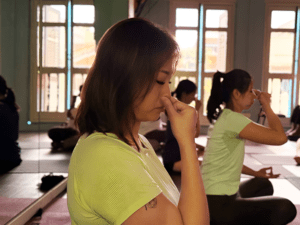
The breathing component is often underestimated. Slow, controlled breathing helps shift the nervous system out of the fight or flight state, and it is a skill employees can use at their desk, before a presentation or after a difficult call, long after the class has ended. This is a large part of why yoga suits the workplace so well: it gives people practical skills, not just a session.
Reviews of workplace yoga studies have generally found improvements in stress and mental wellbeing among staff who take part, although researchers note that many trials are small and further research is needed. Many of the physical symptoms of chronic stress that employees report respond to the same approach.
What Should Be Included in a Wellness Programme?
A good employee wellness programme should cover physical health, mental health and social wellbeing. That usually means regular physical activity, stress management and mental health support, health education, healthy food options and activities that build connection between colleagues. Leadership support, flexible scheduling and a way to collect feedback are equally important.
Yoga covers more of these areas than most single activities. It is physical exercise, it teaches stress management and, in a group setting, it builds a sense of connection. It should not be the only element on offer, however. It works best alongside other support, particularly an employee assistance programme or access to mental health professionals for those who need more than a class can provide.
A common mistake is to launch everything at once. It is usually more effective to begin with one or two well-run activities, observe what employees use and build gradually from there.
How Can Corporate Yoga Fit into a Wellness Programme?
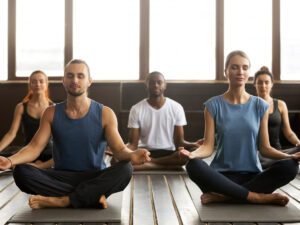
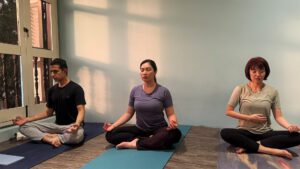
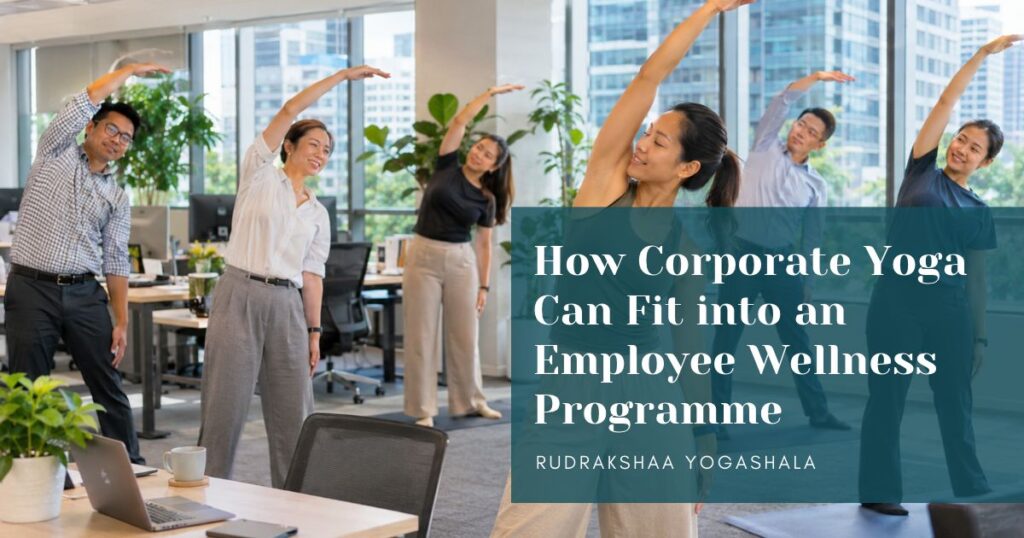
Corporate yoga fits into a wellness programme most effectively as a regular, scheduled activity, such as a weekly lunchtime or after-work class, rather than a one-off event. It can be supported by shorter elements such as desk stretches, guided breathing breaks and meditation sessions, along with occasional workshops. Offering both on-site and online options helps include hybrid and remote staff.
A simple structure might look like this:
A weekly class at a fixed time. Consistency builds both the habit and the results. Lunchtime works well in many Singapore offices, though some teams prefer early evening.
Small daily practices. A five-minute breathing exercise at the start of team meetings or a short stretching routine for desk breaks keeps the practice alive between classes.
Quarterly larger events. Every few months, run something bigger, such as a stress management workshop, a meditation session during a busy reporting period or a wellness day away from the office. These give the programme a sense of momentum.
What Are Some Ideas for a Corporate Wellness Programme?
Popular ideas for a corporate wellness programme include weekly yoga or stretching classes, guided meditation and breathwork sessions, walking meetings or step challenges, healthy lunch workshops, mental health talks, ergonomic desk assessments, sound healing sessions and wellness retreats. The most effective programmes combine regular activities with occasional special events and allow employees to choose what suits them.
Some ideas that work particularly well in Singapore offices:
Lunchtime yoga or chair yoga. Short sessions that are easy to attend and require no change of clothes.
Meditation before high-pressure periods. A quiet 20-minute session before quarterly deadlines or major pitches can make a noticeable difference to how people cope. The physical toll of these periods is explained in what high cortisol does to the body.
Sound baths. Popular as a team activity because they require no skill at all. Participants simply lie down and listen, and almost always leave more relaxed than they arrived. Our guide to the benefits of a sound bath explains why they work so well for groups.
Breathwork sessions. These teach practical techniques employees can use at their desk whenever they need them.
Wellness retreats. For leadership teams or as a reward, a retreat offers a proper reset away from the office. It is a larger commitment but can have a lasting effect.
What Makes a Wellness Programme Effective?
The most effective wellness programmes are regular, easy to join, supported by leadership and shaped by what staff actually want. They focus on practical activities such as exercise, stress management and mental health support rather than one-off perks, and they measure participation and gather feedback so they can be improved. Voluntary programmes held during working hours tend to see the best engagement.
Leadership involvement makes a greater difference than many companies expect. When managers attend the yoga class, it sends a clear message that taking time for wellbeing is genuinely encouraged. When they do not, many employees quietly assume it is not. Burnout also affects staff differently, as covered in why women burn out differently.
Scheduling matters too. Classes held during working hours, or that replace a meeting rather than extending an already long day, achieve far better attendance than those held early in the morning or late in the evening. It is also worth surveying staff before launching anything, as a short questionnaire can prevent a programme from being built around activities nobody wants.
What Are Some Good Staff Wellbeing Activity Ideas?
Good staff wellbeing activity ideas include group yoga classes, desk stretching breaks, guided meditation, sound healing sessions, nature walks, mindful lunch breaks, journalling workshops and team wellness days. Simple, low-pressure activities that require no special skills or fitness tend to attract the widest participation, and mixing physical, mental and social activities ensures there is something for everyone.
Several smaller ideas cost very little:
A “no meetings” hour. Once a week, employees can use this time for a walk, a stretch or simply to think.
A quiet room. A space in the office with a few mats and cushions, available to anyone who needs ten minutes away from their screen.
A monthly wellness talk. An external expert speaking on topics such as sleep, nutrition or managing stress.
None of these replaces a structured programme, but together they reinforce the message that wellbeing is part of how the company operates rather than a box ticked once a year.
How Do You Measure Whether a Wellness Programme Is Working?
Measure a wellness programme by tracking attendance and repeat participation first, since these show whether employees value it. Then use short surveys before and after, asking about stress levels, sleep, back or neck pain and overall wellbeing. Over longer periods, look at broader indicators such as sick days, staff turnover and engagement scores, bearing in mind that many factors influence these.
Informal feedback from employees is often one of the most useful guides of all. Conversations with participants frequently reveal what is working, and what is not, more clearly than numbers alone.
Expect the first month or two to be uneven while people adjust. The most meaningful results appear three to six months in, once the novelty has passed and it becomes clear who continues to attend.
Conclusion
Corporate yoga works best within a wellness programme when it is regular, accessible and supported by company leadership. On its own, it will not solve burnout or replace mental health support. As the steady centre of a wider programme, however, it gives employees a practical, repeatable way to look after themselves, and the benefits tend to show in how they feel and work.
Rudrakshaa Yogashala designs corporate yoga sessions in Singapore for companies building or refreshing their wellness programmes. Alongside regular Hatha yoga classes at the office, at the studio or online, the team offers meditation, breathwork and sound healing sessions, and can create a programme around your team’s schedule and goals. Get in touch to discuss a pilot programme for your team.
Frequently Asked Questions
How much does it cost to add yoga to a wellness programme?
The cost depends on class frequency, group size and whether sessions are held on-site or online. Most providers prepare a quote based on your team’s needs. Starting with a short pilot is a cost-effective way to test interest before committing to a longer programme.
Should yoga be compulsory for employees?
No. Voluntary participation works far better. Making yoga compulsory tends to create resentment and undermines the purpose of the programme. Encouragement from leadership and convenient scheduling are much more effective ways to increase attendance.
What if our employees have never done yoga
That is entirely normal. Corporate yoga classes are designed for beginners, and teachers offer gentler options for anyone with injuries or limited mobility. Many employees discover yoga for the first time through a workplace programme.
Can small companies run corporate yoga?
Yes. Even a team of five or six people can run a regular class, and smaller groups often benefit from more personal attention. Online sessions can also make yoga accessible for small teams without a suitable space.
How long before we see results from corporate yoga?
Employees often feel calmer after the very first session. Improvements in stress, sleep and back pain usually become noticeable after four to eight weeks of regular classes. Broader organisational results, such as engagement, take three to six months to assess.