
First-time sound bath attendees often arrive with a mix of genuine curiosity and mild uncertainty about what they’re walking into. The format is simple enough, but there are practical things worth knowing before you go — not because the rules are strict, but because small preparation makes the experience significantly better. If you would like to understand the practice first, our guide to what sound healing is and how it works covers the basics.
What Is a Sound Bath and What Happens During One?
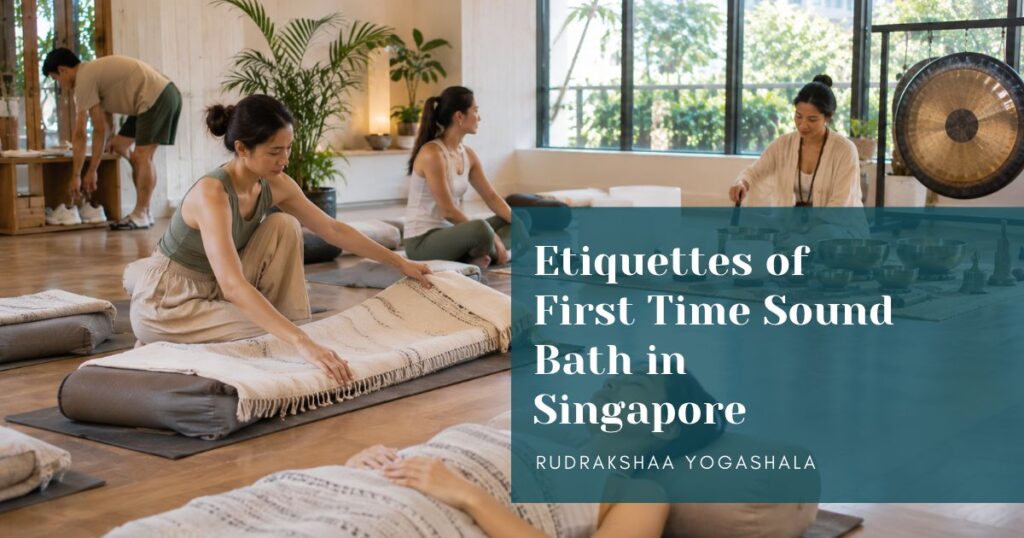
A sound bath is an immersive experience where participants lie down in a comfortable position while a practitioner plays instruments — typically Tibetan singing bowls, crystal bowls, gongs, or a combination of these — creating sustained waves of sound and vibration that wash over and through the body. The session typically lasts 60 to 90 minutes, and participants remain still throughout. Many sessions also include chanting, such as the Om at 432 Hz practice many students ask about.
Nothing is required of you during a session. There is no instruction to follow, no posture to hold, no breath technique to practice. The practitioner guides the sound. Your role is to lie still and allow the experience to unfold. This passivity is the point: the nervous system enters a deeply restorative state precisely because no demands are being made of it. That drop in stress hormones is explained further in what high cortisol does to the body.
What Do You Wear and Bring to a Sound Bath?
Wear loose, comfortable clothing you can lie down in for 60 to 90 minutes without feeling restricted — yoga pants, loose linen, casual layers. Avoid anything tight across the chest or belly since the vibration is felt physically and constriction reduces the experience.
Bring a light layer regardless of what the studio temperature feels like when you arrive. Body temperature drops significantly during deep relaxation, and most people feel cold during the second half of a session even in Singapore’s climate. A thin blanket or light wrap is worth carrying.
Most sound bath studios in Singapore provide mats, bolsters, blankets, and eye pillows. Check the studio’s listing before attending to confirm, or bring your own mat if you have one. An eye pillow or sleep mask helps significantly — blocking light makes it easier to drop into the altered state, even in a darkened room.
Leave your phone on silent or switched off and store it in your bag before the session starts. Not on vibrate. The physical vibration of a notification during a session is more disruptive than it sounds, and more importantly, the mental pull of a possibly ringing phone keeps a part of the nervous system on alert.
What to Say at the Start of a Sound Bath?
Nothing specific is required. Most sound bath sessions in Singapore start with the practitioner offering a brief orientation — how long the session will run, what instruments will be used, what participants can expect to experience, and the invitation to find a comfortable position and close their eyes.
If you have a health condition worth the practitioner knowing about — tinnitus, epilepsy, a metal implant, pregnancy, severe PTSD, or significant anxiety — mention it quietly before the session begins rather than during. This takes 30 seconds and allows the practitioner to adjust instrument placement or frequency selection where relevant.
If you’re not sure whether you should attend given a specific health situation, email or call the studio ahead of time rather than deciding on the spot. Most practitioners are happy to advise.
What Are You Supposed to Do During a Sound Bath?
Lie down, close your eyes, and allow whatever happens to happen. If thoughts arise, that is normal — you are not doing it wrong. The instruction is not to have a blank mind. It is to keep returning attention to the physical sensation of sound and vibration in the body rather than following the thought train.
If emotion surfaces, allow it. Crying is not uncommon, particularly in the first few sessions. The altered state created by sound healing gives the limbic system access to emotional material that daily life keeps suppressed. This is the practice working, not something going wrong. The same kind of release is common on a first yoga retreat, when the usual distractions fall away.
If you fall asleep, that is also fine. Many people do in their first session. The sound continues to affect the nervous system regardless of whether you are consciously tracking it.
If at any point you feel genuinely uncomfortable rather than just unfamiliar, it is fine to sit up quietly and adjust your position. This is rare but worth knowing is permitted.
What Is the Dress Code for a Sound Bath?
There is no formal dress code. The practical requirements are comfort and warmth. Avoid synthetic fabrics that rustle when you move — even small sounds become very audible during the stillness of a session. Natural fabrics like cotton or linen are quieter and more breathable.
Do not wear heavy perfume or strongly scented products to a group sound bath. The enclosed space, the altered state, and the sensitivity produced by the session make strong scents distracting and occasionally nauseating for other participants.
Remove shoes before entering the session space. Most studios have a clear space to leave footwear at the door.
Who Should Not Do a Sound Bath?
Sound baths are not appropriate for people with epilepsy triggered by auditory stimuli, those with cochlear implants or skull metal implants, individuals in active psychotic episodes, and people in the first trimester of pregnancy where vibration near the body is involved.
People with severe tinnitus should inform the practitioner before attending — specific high-frequency instruments may be avoidable, and some practitioners have experience working with tinnitus sufferers.
People with significant trauma histories or severe PTSD should speak with both their therapist and the practitioner before attending a group session. The depth of altered state produced can occasionally surface difficult material in a group context that is better processed in a supported one-on-one environment. A private session can be arranged for this kind of situation.
For everyone else, including people with anxiety, depression, insomnia, burnout, chronic pain, and high stress, sound baths are safe and typically very beneficial.
What Not to Do After a Sound Bath?
Avoid rushing. The nervous system is in a deeply parasympathetic state immediately after a session, and abruptly returning to stimulation — phone, traffic, a loud conversation, strong coffee — counters the effect and feels jarring. Build in at least 20 to 30 minutes of quiet transition time after the session ends if you can.
Drink water. The vibrational effect of the session and the depth of relaxation facilitates cellular release processes that require hydration. More water than usual in the two to three hours following the session is consistently recommended by practitioners.
Avoid alcohol for the rest of the day. The altered state and emotional openness that a sound bath produces make alcohol’s effects more pronounced and less pleasant than at other times, and it interferes with the sleep quality improvement that is one of the session’s primary benefits.
Avoid vigorous exercise immediately after. A walk is fine. A run or a hard gym session counteracts the parasympathetic state the session produced. If you practice yoga, a gentle or restorative session later in the day pairs well with a morning sound bath. Traditional Hatha yoga classes, which share the same slow, breath-led approach, are another good pairing.
Conclusion
A first sound bath experience is straightforward when you know what to expect. Come comfortable, arrive a few minutes early, mention anything relevant to the practitioner, find your position on the mat, close your eyes, and allow it. The practice requires nothing else from you.
At Rudrakshaa Yogashala, sound healing sessions in Singapore are held in a small group setting with experienced practitioners. If you want to experience your first sound bath somewhere that understands both the sound healing tradition and the broader yoga and wellness context it sits within, check what’s currently on the schedule. To see what regular sessions can do, read about the benefits of a sound bath, or get in touch if you have a health question before booking.
Frequently Asked Questions
Can I bring a friend to a sound bath?
Yes, and many people find it easier to attend for the first time with someone they know. The experience itself is individual — you’ll both be lying quietly with eyes closed for most of the session — but having a familiar face in the room reduces the mild social anxiety of a new environment. Just make sure both of you commit to the no-talking, phones-off norm for the duration.
How early should I arrive for a sound bath?
Ten to fifteen minutes before the session start time is ideal. This gives you time to settle in, remove shoes, find your position, fill out any intake forms, and speak to the practitioner if you have anything relevant to mention. Arriving just as the session starts means you’re in a slightly rushed state when the session begins, which takes longer to settle out of.
What if I need to leave early?
If you need to leave before the session ends, let the practitioner know before it starts so they can position you near the door. Leaving mid-session by stepping carefully over other participants is possible but disruptive. Having the practitioner aware means they can facilitate your exit as quietly as possible.
Is it normal to feel emotional during or after a sound bath?
Very normal. The altered brainwave state produced during a sound bath gives the emotional processing systems of the brain access to material that the cognitive brain keeps suppressed during ordinary waking life. Tears, unexpected feelings of sadness or joy, and a general sense of emotional tenderness are reported by a large proportion of attendees, particularly in their first several sessions. It passes, and most people describe it as a relief rather than a distress.
How is a sound bath in Singapore different from guided meditation?
Guided meditation requires active cognitive participation — following instructions, visualising, controlling attention. A sound bath requires nothing cognitive from you. The sound creates the altered state directly through physiological mechanisms, rather than asking you to reach it through mental effort. This makes it more accessible for people who find meditation frustrating, and it often produces a deeper altered state more quickly than beginning meditation practice does.