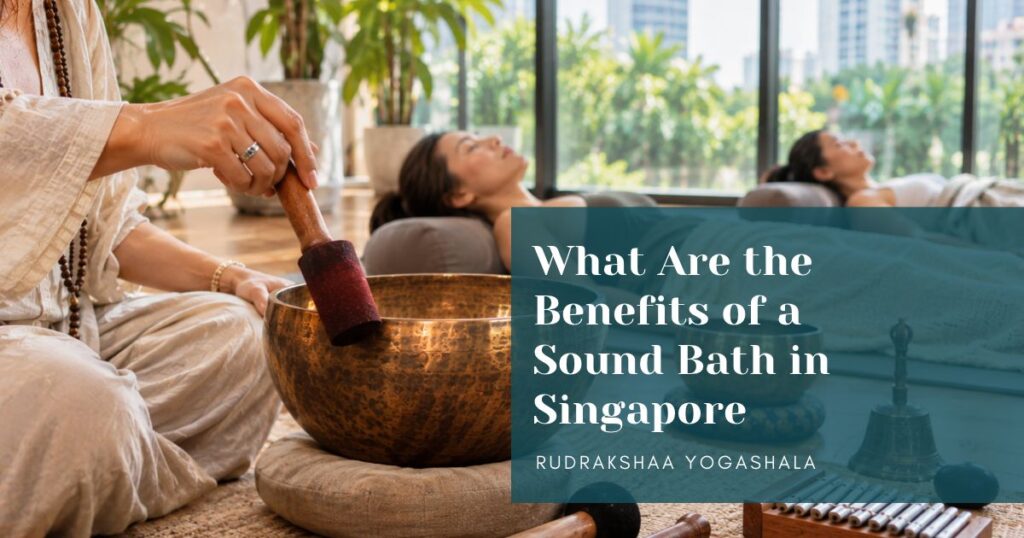

Singapore’s pace of life makes sound baths more useful here than most places. The combination of high work pressure, limited natural quiet, and the chronic low-grade stimulation of urban density creates a nervous system environment that standard rest doesn’t fully counteract. A sound bath session does something different. It creates the physiological conditions for deep rest through vibration and frequency rather than requiring the nervous system to find its own way there. These pressures often show up as physical symptoms of chronic stress long before people recognise them as stress.
Are Sound Baths Good for You?
Yes, sound baths produce measurable physiological and psychological benefits. Research from Healthline and multiple peer-reviewed sources confirms that sound bath sessions reduce cortisol levels, lower blood pressure, decrease heart rate, and shift brainwave activity toward alpha and theta states associated with deep relaxation and restorative sleep. How this happens is explained in what sound healing is and how it works.
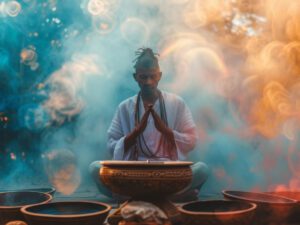
A study published in the Journal of Evidence-Based Integrative Medicine found that participants who attended Tibetan singing bowl meditation sessions showed significant reductions in tension, anger, fatigue, and depressed mood compared to those who sat in silence. The effects were consistent across age groups and required no prior meditation experience.
Sound baths are particularly well-suited to people who find conventional meditation difficult. The immersive nature of the sound creates the altered state externally, rather than requiring the participant to generate it through sustained attention and practice. Breath-led practices such as pranayama can then build on that foundation.
What Are the Specific Benefits of a Sound Bath?
The primary benefits of sound bath sessions in Singapore are stress and anxiety reduction, improved sleep quality, relief from tension headaches and muscle tightness, lowered blood pressure, reduced emotional reactivity, and enhanced sense of mental clarity after sessions.
Stress and cortisol reduction is the most consistently documented effect. Sound bath sessions lower salivary cortisol measurably, and participants report feeling significantly less stressed following sessions compared to their pre-session state. For people in chronic stress, this is not trivial.
Sleep improvement is reported by a large proportion of regular attendees. The theta and delta brainwave states induced during a sound bath are the same states that characterise deep and restorative sleep. The nervous system appears to carry some of that state into the hours after the session, which is why many people report unusually deep sleep following an evening session.
Pain relief is another consistent finding. Research from the Inner Summits neuroscience review of sound bath therapy found that vibration in the frequencies produced by singing bowls and gongs activates endorphin pathways and reduces pain perception. This is relevant for people managing chronic tension, fibromyalgia, or stress-related somatic pain. For pain that settles in the lower back, chronic lower back pain and Hatha yoga covers a complementary approach.
Emotional processing tends to be a secondary benefit that surprises first-timers. The altered state produced in a sound bath creates access to emotional material that the cognitive brain ordinarily suppresses. People sometimes cry unexpectedly, feel waves of emotion they can’t attribute to anything specific, or emerge from sessions with unusual clarity about situations they’ve been stuck in. This is the limbic system processing rather than logic, and it tends to be useful rather than distressing when it happens in a well-facilitated session.
How Often Should You Go to a Sound Bath?
For general wellness and stress maintenance, attending a sound bath session in Singapore once a week produces noticeable cumulative effects within four to six weeks. For people managing acute stress, anxiety, insomnia, or burnout, two sessions per week during an initial intensive period of four to six weeks builds the nervous system change more quickly.
The compounding effect is a real phenomenon. In the first few sessions, most people experience relaxation. By the fourth or fifth session, many describe entering the deep theta state faster and more completely, and the quality of stillness available to them deepens. The nervous system learns the cue and responds faster over time.
Monthly attendance after the initial intensive period is enough to maintain the benefits for most people. The nervous system doesn’t forget what it has learned, but it does drift back toward habitual patterns without some regular reinforcement. For a longer reset, sound healing also features in many yoga retreats from Singapore.
Who Should Not Attend a Sound Bath?
Sound baths are not suitable for people with epilepsy or sound-triggered seizure disorders, those with cochlear implants or metal plates in the skull, and individuals in active psychotic states where altered perception could be destabilising.
People in the first trimester of pregnancy should avoid sessions where bowls are placed on or near the abdomen. Sitting in a sound bath at a reasonable distance from the instruments is generally considered safe from the second trimester onward, but it is worth informing the practitioner so bowl placement can be adjusted accordingly.
People with severe PTSD should speak with both their therapist and the sound healing practitioner before attending a group session. The deep altered states produced can sometimes surface suppressed trauma material, which requires skilled facilitation. A one-on-one therapeutic sound session with an experienced practitioner is more appropriate than a general group class for this population.
People with severe tinnitus should also approach with care, as specific high-frequency tones may temporarily intensify symptoms. Experienced practitioners can adjust the instrument selection if they are informed in advance.
What Not to Do After a Sound Bath?
After a sound bath session, avoid immediately returning to high-stimulation environments, heavy screen use, alcohol, caffeine, and vigorous exercise for at least two hours. The nervous system is in a deeply parasympathetic state after a session, and abruptly returning to sympathetic-dominant activity counters the effect and can feel jarring.
Drink water. Sound healing shifts fluid dynamics in the body and facilitates cellular release in ways that require hydration to process efficiently. Most practitioners recommend drinking more water than usual in the hours following a session.
Give yourself transition time. The altered state produced during a sound bath doesn’t dissolve immediately. Many people feel dreamy, emotionally tender, or unusually sensitive for an hour or two afterward. This is the integration window. Protecting it rather than rushing back into noise and obligation is what allows the session’s effects to consolidate.
How Long Does It Take for Sound Therapy to Work?
Most people feel the primary relaxation effect of a sound bath within the first session, typically within 20 to 30 minutes of the session beginning. The sleep improvement effect often appears the same night. Cumulative benefits to stress levels, emotional regulation, and baseline nervous system tone build over four to eight weeks of regular attendance.
The timeline distinction matters: the acute effect is immediate, the training effect is gradual. People who attend one session and evaluate the practice based on a single experience often miss the compounding benefit that regular attendance builds. This is similar to the pattern with meditation or yoga — a single session is pleasant and useful, but the significant change comes from consistent practice over weeks. Pairing sound baths with regular Hatha yoga classes tends to speed up that compounding effect.
Conclusion
Sound baths in Singapore offer something that most urban wellness options don’t: a route to genuine deep rest that doesn’t require skill, prior experience, or sustained effort. The mechanisms are physiological, the research is solid, and the outcomes — reduced cortisol, improved sleep, lowered anxiety, enhanced clarity — are consistent across a wide population. Practices such as restorative yoga work on the same principle of supported, effortless rest.
At Rudrakshaa Yogashala, sound healing sessions are offered alongside traditional Hatha yoga practice. If you’re new to sound baths and want to experience the practice in a setting where both yoga and sound healing are understood at a traditional depth, it’s worth exploring what’s on the schedule. If you are planning your first visit, read our first-time sound bath etiquette guide, or get in touch with any questions.
Frequently Asked Questions
Can a sound bath help with anxiety?
Yes, and it’s one of the better-supported applications. The vagal activation and cortisol reduction produced by sound bath sessions directly addresses the physiological dimension of anxiety. People with chronic anxiety who attend regular sessions typically report lower baseline anxiety levels within four to six weeks, and many describe sound baths as the most effective single tool they’ve found for acute anxiety relief. It doesn’t resolve the sources of anxiety, but it interrupts the physiological state that anxiety requires to sustain itself.
Will I fall asleep during a sound bath?
Possibly, and that’s not a problem. The brainwave states induced during a sound bath — alpha and theta — are very close to sleep states, and some people cross the threshold into light sleep during sessions. Most practitioners consider this a positive sign that the nervous system is deeply relaxed. You will not miss anything significant; the sound continues to affect the autonomic nervous system whether you are consciously aware of it or asleep.
Do I need to do anything during a sound bath?
No. Lie down comfortably, close your eyes, and allow the sound to do the work. There is no technique to practice, no breath to control, no attention to sustain in any particular direction. People who arrive expecting to meditate and then “try” to relax often find the first session awkward as a result. The practice is allowing, not doing. Most people find this becomes easier after the first session once they know what to expect.
What should I wear to a sound bath?
Comfortable, loose clothing that you can lie down in for 60 to 90 minutes without feeling restricted. Bring a light layer because body temperature drops when you’re in deep rest. Most studios provide mats and bolsters, but check beforehand whether to bring your own.
Is a sound bath the same as white noise or ASMR?
No, though they share the feature of using sound for its effects on the nervous system. White noise masks environmental sound and helps with sleep onset but does not produce the brainwave entrainment or vibrational resonance of a live sound bath. ASMR is a personal, usually digital experience of specific auditory triggers. A sound bath involves live acoustic instruments producing complex harmonic frequencies in a physical space, creating a physiological effect that recorded or generated sound does not fully replicate.