
The gap between what people imagine a yoga retreat will be like and what it actually is tends to be significant in both directions. Some people arrive expecting a rigorous spiritual ordeal and find something far more welcoming. Others expect a relaxing holiday with some yoga thrown in and find the structure and self-confrontation more demanding than anticipated. Getting a clearer picture beforehand makes the experience considerably better.
What Happens at a Yoga Retreat?
A yoga retreat typically involves a daily structured schedule that includes morning practice, meals, afternoon sessions of yoga, meditation, pranayama or workshops, and evening practice or free time. Accommodation, meals, and instruction are usually provided in one package, and the absence of the usual demands of daily life – work, domestic responsibilities, digital stimulation – is what creates the conditions for actual change rather than just a holiday. This is the same structural principle explored in why a yoga retreat in nature helps burnout recovery, which covers why this removal from daily stimuli matters physiologically, not just experientially.
Most retreats run a schedule something like this: wake between 5:30 and 6:30 am, morning practice from 6 to 8 am, breakfast, rest or optional activities, afternoon session from 3 to 5 pm, dinner, evening practice or meditation from 7 to 8:30 pm, and lights out reasonably early. The pace is slower than most people’s normal life. Significantly slower. That’s the point.
The length of a retreat varies from weekend formats (2 to 3 days) through week-long programs (7 to 10 days) to extended immersions of 3 to 4 weeks. The depth of change available correlates with duration. A weekend retreat gives a taste. A week starts to produce genuine decompression. Two weeks or more is where more durable change tends to happen. A program like Beyond Burnout: Yoga Retreat in Kerala is built around this same duration principle, structured specifically to move participants past the “taste” phase into genuine physiological change.
Is It Okay to Go on a Yoga Retreat as a Complete Beginner?
Yes, most retreats actively welcome beginners and are structured to accommodate different experience levels. The structured environment of a retreat is often a better context for beginners than a regular studio class – you have more time with your teacher, a clearer framework, and no competitive reference points since everyone is on their own journey. Anyone starting from scratch benefits from spending some time with the yoga basics before a retreat, simply so the foundational vocabulary and postures feel familiar rather than new on top of everything else that’s unfamiliar about the experience.
What beginners most often underestimate is the emotional dimension. New practitioners without an established practice have less ability to regulate what surfaces when the usual distractions drop away. This is not a reason not to go. It’s a reason to choose a retreat that includes some integration support – discussion time with teachers, journaling prompts, or meditation guidance that helps process what comes up rather than just sitting with it alone.
The physical demands are typically manageable. Good retreat teachers know their participants are not all experienced yogis and structure sessions accordingly. If you have a specific physical limitation or health condition, communicate it to the organisers before you arrive rather than discovering mid-week that certain sessions don’t accommodate it. Beginners preparing for a first retreat may also find it useful to review 12 common yoga mistakes beginners make and work through 8 foundational yoga poses for beginners beforehand, so the early sessions on retreat build on some existing familiarity rather than starting entirely cold.
What Do People Find Most Surprising About Their First Retreat?
The most common surprises on a first yoga retreat, roughly in order of frequency: how tired people feel in the first two to three days, how emotional the experience can be, how much better sleep becomes by midweek, how little they miss their phones, and how much they don’t want to leave at the end.
The fatigue in the early days is almost universal and worth understanding. Most people arrive running on chronic adrenaline and cortisol. When the stimulation drops and the nervous system begins to downregulate, the actual level of depletion beneath the surface becomes apparent. The tiredness is the real state emerging. It’s not the retreat making you tired – it’s the retreat allowing you to feel what was already there. This depletion-before-recovery pattern is explained in more physiological detail in high cortisol effects on the body, which covers exactly what sustained cortisol elevation does to energy and sleep before it starts resolving.
The emotional element surprises people most consistently. Sustained stillness, physical practice, and reduced stimulation reliably surface emotions that normal life keeps pushed down. Grief, frustration, unexpected joy, old memories, clarity about situations that have been confusing – all of this is commonly reported. Most retreat teachers normalise this and offer support. If you find yourself crying in Yin class, you are in normal company.
What Should I Pack for a Yoga Retreat?
For a yoga retreat lasting one to two weeks, the essentials are comfortable practice clothes for morning and evening sessions (layers for early morning, lighter options for afternoon), a personal practice journal, any required medications, personal care products that you prefer (many retreats provide basic toiletries but not always what you’re used to), and comfortable clothing for non-practice time that isn’t necessarily yoga wear.
What most people bring too much of: books, laptops, elaborate beauty products. What most people bring too little of: warm layers for early morning, something to write in, comfortable shoes for walking between sessions. It’s also worth thinking through what to eat and what to avoid before a yoga session ahead of arrival, since retreat meal timing around practice sessions is often different from a normal daily routine.
Phones are technically optional on most retreats, though some have explicit digital detox policies. Arriving with the intention to use the phone minimally, even if you don’t fully switch off, tends to produce a better retreat experience than maintaining normal digital habits in a retreat setting.
How Do You Get the Most Out of a Yoga Retreat?
Getting the most from a yoga retreat comes down to three things: showing up fully to the schedule, resisting the urge to recreate normal life patterns in the retreat setting, and allowing the decompression to happen at its own pace rather than forcing it.
The most common way people undermine their retreat experience is by maintaining connectivity. Checking email between sessions, messaging people back home, or spending rest periods scrolling – all of these keep the sympathetic nervous system engaged and prevent the decompression that the retreat schedule is designed to produce. This is the same sympathetic-activation mechanism discussed in how yoga helps with stress and the nervous system.
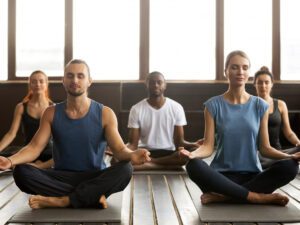
The second most common issue is impatience with the pace. Retreats feel slow compared to normal life, deliberately so. Tolerating that slowness and allowing yourself to be bored in the early days is part of how the nervous system learns to downregulate. Boredom on a retreat is often a precursor to the quality of stillness that makes the rest of the experience meaningful. Photos from a past group immersion, like the Darjeeling retreat gallery, give a good sense of what this slower, structured pace actually looks like day to day.
What Happens to Your Body After a Week of Yoga Retreat?
After a week of yoga retreat, most participants report significantly improved sleep quality, reduced muscle tension, particularly in the neck and shoulders, clearer mental focus, reduced anxiety and baseline stress levels, and a general sense of physical lightness that’s difficult to describe but consistently reported. This clearer mental focus overlaps with what’s explored in yoga and cognitive function, where the same cumulative, weeks-long pattern of returning clarity is discussed outside the retreat context specifically.
The physiological changes behind these experiences are measurable. Cortisol levels reduce across the week. Vagal tone improves. Sleep architecture normalises toward deeper, more restorative cycles. Muscle holding patterns release in ways that benefit from sustained daily practice far more than occasional studio sessions. The same pattern, extended to a full 30 days, is covered in why a yoga retreat is the best reset for stress and burnout, which lays out the fuller trajectory of physiological change over a longer immersion.
The changes made in one week don’t automatically maintain themselves after returning to normal life. What maintains them is establishing a regular practice back home that sustains some fraction of the nervous system work done during the retreat. Most people who take retreats seriously also maintain a home practice, and the retreat deepens and renews that practice rather than replacing it. For those who can’t attend a studio regularly, online traditional Hatha yoga classes are a practical way to sustain that home practice between retreats.
Conclusion
A first yoga retreat is one of the more significant experiences most practitioners describe having. Not because of what happens externally – the schedule, the location, the classes – but because of what becomes possible when the usual conditions of daily life are temporarily removed. The nervous system gets space to do what it’s been trying to do all along.
At Rudrakshaa Yogashala, traditional Hatha yoga in Singapore provides the foundation that makes a Kerala retreat or any retreat significantly more productive. Students who arrive at a retreat with some consistent practice behind them settle into the schedule faster and access deeper states more readily than those starting from scratch. If a retreat is something you’re building toward, browse sessions or check the schedule, and get in touch – a consistent practice now is the best preparation.
Frequently Asked Questions
Is it normal to feel worse before you feel better on a yoga retreat?
Very normal, and it typically happens in the first two to three days. The tiredness, emotional surfacing, and occasional mild physical discomfort as the body releases held tension are all signs the retreat is working, not signs something is wrong. By day four or five, most people describe a noticeable shift in how they feel. If symptoms are severe or feel concerning, speak to your retreat teacher – they’ve seen this pattern many times and can support you through it.
Can I attend a yoga retreat if I have anxiety or depression?
Many people attend retreats specifically because of anxiety or depression, and the outcomes are often very positive. The caveat is choosing a retreat with appropriate support – one where teachers are experienced with mental health challenges and where some individual support is available if needed. A retreat in a remote location with no support infrastructure and a packed physically demanding schedule is not appropriate for someone in an acute mental health episode. A gentler, more supported format with space for individual check-ins is.
What type of yoga retreat is best for a first-timer?
A 5 to 7 day traditional Hatha retreat with an experienced lead teacher, a small group (ideally under 15 people), and a schedule that includes both active practice and genuine rest time. Avoid anything that’s heavily themed around transformation or breakthrough in marketing language, which often signals high emotional pressure rather than genuine depth. Look for retreat descriptions that talk about the teaching lineage, the teacher’s background, and the physical environment rather than just outcomes.
Will I be expected to be vegetarian at a yoga retreat?
Most traditional yoga retreats serve vegetarian or plant-based food as the default, rooted in yogic dietary philosophy and Ayurvedic principles. It’s rarely compulsory, but the food served typically won’t include meat. For most participants, this is a non-issue. If you have significant dietary restrictions beyond this, check with the retreat organisers before booking.
How do I know if a yoga retreat is good quality?
Check the lead teacher’s credentials and lineage rather than the location photos. Read past participant reviews that describe the teaching specifically rather than the setting. Look for transparency about the daily schedule and what’s included. Small group sizes, a clear teaching lineage, and teachers willing to answer questions directly before you book are all positive signals. High-production websites and vague language about transformation are not.