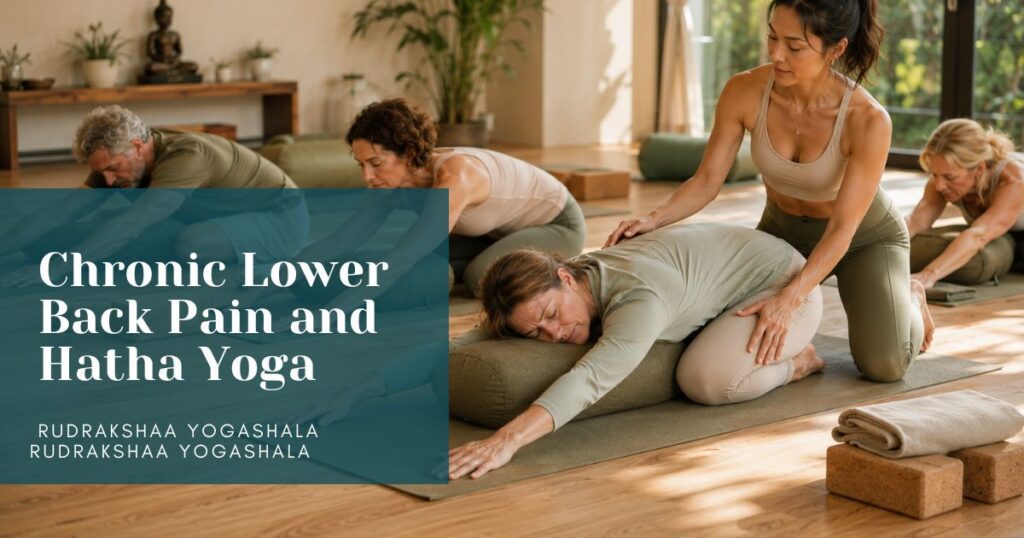

Chronic lower back pain is one of the most common reasons people explore yoga for back pain for beginners, and also one of the situations where choosing the wrong style causes more harm than good. The research on yoga for back pain is genuinely promising – but it’s mostly built on slower, more careful styles that prioritise alignment and breath over pace. Hatha sits at the centre of that evidence base.
Does Yoga Actually Help with Chronic Lower Back Pain?
Yes, yoga has strong clinical evidence for reducing chronic lower back pain. A Cochrane Review – one of the most rigorous forms of medical evidence synthesis – found that yoga produces moderate improvement in back-related function and a small to moderate reduction in pain compared to non-exercise controls. The effects were consistent enough to support recommending yoga as part of a management approach for chronic non-specific lower back pain.
The National Center for Complementary and Integrative Health (NCCIH) reaches the same conclusion in its clinical digest on yoga for pain: the evidence is most consistent for chronic low back pain, particularly with programs that include breath awareness, gentle movement, and held postures – all hallmarks of Hatha practice.
What the research does not support is starting with vigorous or dynamic yoga styles when pain is already present. The studies that showed benefit were predominantly slow, structured programs. High-impact or fast-paced styles were either excluded from studies or associated with adverse events.
Why Is Hatha Yoga the Safest Starting Point for Back Pain?
Hatha yoga is the safest starting point for lower back pain because it holds postures long enough to allow neuromuscular re-education – teaching the body new movement patterns – without the cardiovascular demand or rapid transitions that increase injury risk. It also gives teachers time to observe and correct alignment in individual students.
Most chronic lower back pain is not structural in origin. Movement avoidance, muscle imbalance, poor postural habits, and nervous system sensitisation maintain it. Hatha yoga addresses all four. The long holds build awareness of spinal position. The breath work downregulates the nervous system’s pain amplification. The sequence – practiced consistently over weeks – gradually restores movement confidence.
The thing that makes Hatha specifically safer than other styles isn’t just the pace. It’s the emphasis on breath cuing and alignment feedback. In a fast Vinyasa class, transitions happen before a teacher can correct a student who’s loading their lumbar spine incorrectly. In Hatha, the pace allows for that correction to actually happen. This is also why a dedicated posture correction and pain relief workshop can be a useful complement to regular class – it gives more concentrated time to individual alignment issues.
Which Hatha Yoga Poses Are Best for Lower Back Pain?
The most effective Hatha yoga poses for lower back pain are those that decompress the lumbar spine, strengthen the posterior chain, and restore hip mobility. Key postures include Bridge Pose, Supine Twist, Cat-Cow, Child’s Pose, and gentle standing forward folds with knees bent.
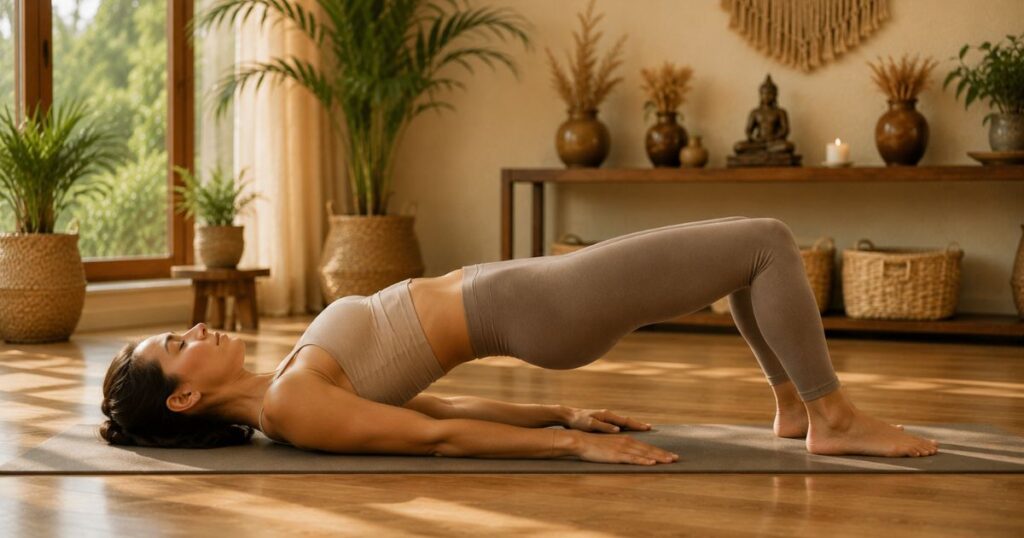
Bridge Pose (Setu Bandhasana)
Bridge Pose strengthens the glutes and hamstrings while gently mobilising the lumbar spine. Most chronic back pain involves weakened posterior chain muscles – the glutes and hamstrings particularly – that have stopped providing the support they’re supposed to. Bridge rebuilds this.
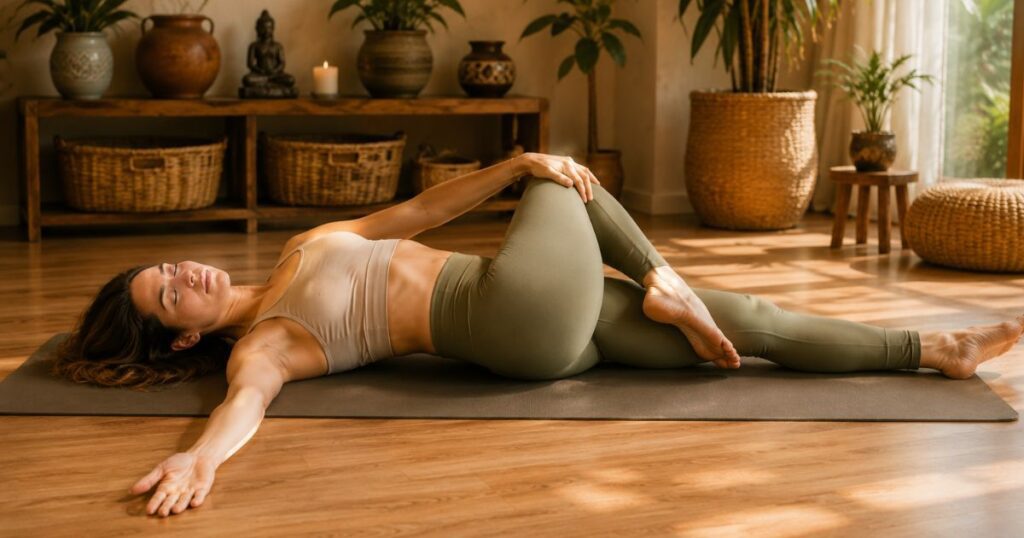
Supine Twist (Supta Matsyendrasana)
Supine Twist creates lateral mobilisation in the thoracic and lumbar spine. Many people with back pain have lost rotational range of motion entirely, which loads the same segments repeatedly during daily movement. Even a gentle held twist restores some of this.
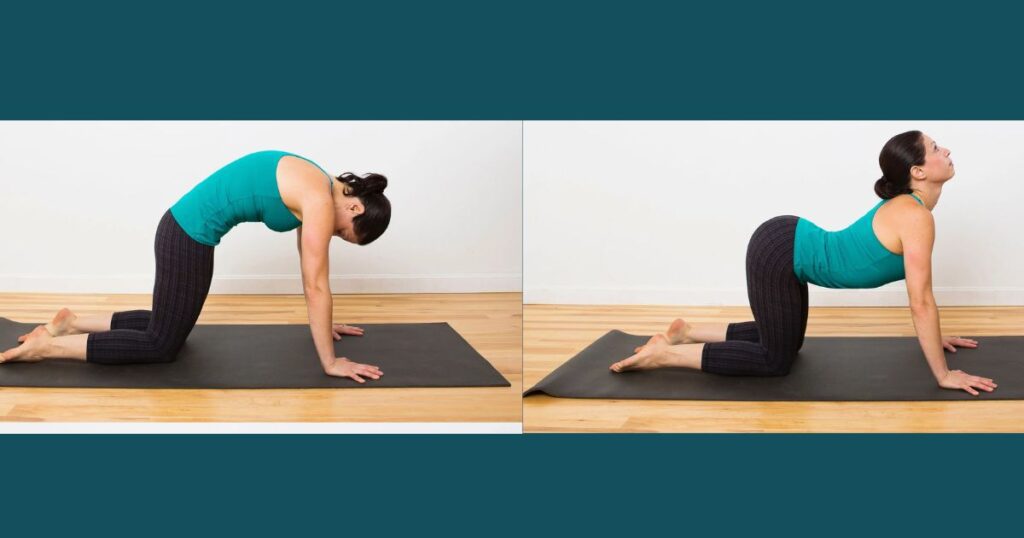
Cat-Cow (Marjaryasana–Bitilasana)
Cat-Cow is the most accessible spinal mobility exercise in yoga. Practiced slowly with breath synchronisation, it lubricates the facet joints and creates movement through segments that chronic pain sufferers tend to brace and protect into immobility.
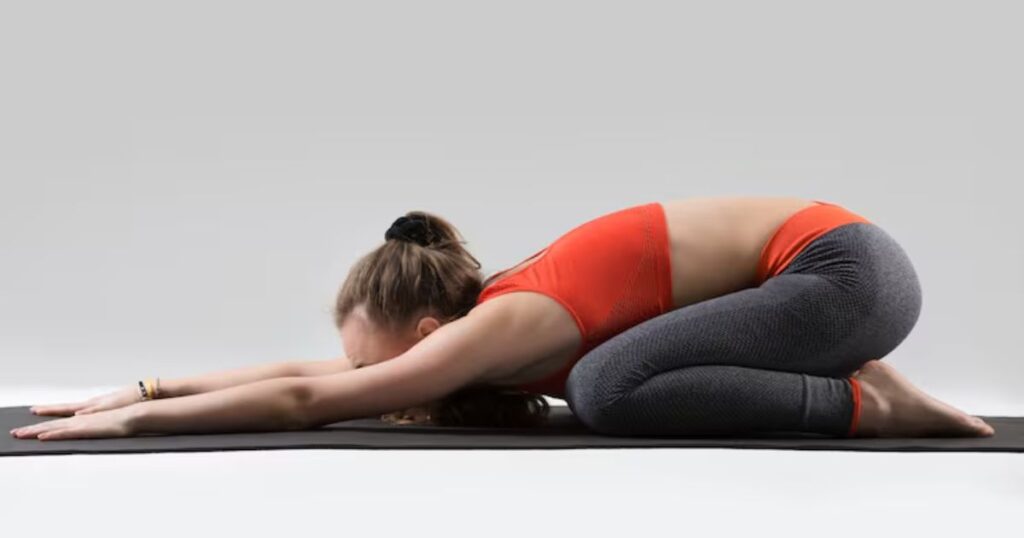
Child’s Pose (Balasana)
Child’s Pose decompresses the lower back through traction and relieves the paraspinal muscles that are often in sustained contraction in people with chronic pain.
What Yoga Poses Should People with Back Pain Avoid?
People with chronic lower back pain should avoid deep forward folds with a rounded spine, unsupported backbends, and any posture that produces sharp or radiating pain down the leg. These include full Wheel Pose, deep Camel, and aggressive forward folds without hip hinge mechanics.
The key distinction is between pain from muscle fatigue or a stretch sensation – which is manageable and often part of recovery – versus pain that is sharp, stabbing, or radiating into the buttock or leg. The second type is a stop signal. It often indicates nerve irritation and needs to be flagged with a teacher and healthcare provider immediately.
Students with disc-related pathology need particular care with forward flexion. Rounding the lower back under load increases intradiscal pressure, which is contraindicated for bulges and herniations. In Hatha practice, this is managed by cuing a hip hinge rather than a spinal fold and by using props to maintain lumbar neutrality in seated postures.
How Long Does It Take for Yoga to Help Lower Back Pain?
Most people with chronic lower back pain notice meaningful improvement within 6 to 12 weeks of consistent Hatha yoga practice, attending two to three sessions per week. The Frontiers in Pain Research literature on yoga for back pain shows the most significant outcomes at 8 to 12 weeks, with functional improvements preceding pain reduction in most cases.
That sequencing is worth understanding. Most students find they move better – more freely, with less guarding – before they notice the pain itself has reduced. The restoration of movement confidence and the reduction in fear-avoidance behaviour tend to come first. Pain intensity follows. This mirrors what’s seen more broadly in how yoga helps with stress and the nervous system – functional and nervous system shifts often show up before subjective symptoms catch up.
This is why consistency matters more than frequency. Two sessions per week maintained for 10 weeks produce better outcomes than six sessions in two weeks, followed by nothing. The nervous system needs repetition across time, not volume in a short burst.
Conclusion
Yoga for back pain for beginners works, and the research is clear enough that it’s no longer a fringe recommendation – the Cochrane Review and NCCIH both support it. The style matters, though. Starting with Hatha rather than a faster, more dynamic class significantly reduces the risk of aggravating the problem. It significantly increases the chance of building a consistent practice that produces results.
At Rudrakshaa Yogashala, small group Hatha classes allow teachers to actually see what each student’s spine is doing and adjust accordingly. If you’re dealing with chronic lower back pain and want to start yoga therapy in Singapore in a setting where that level of attention is possible, browse sessions, check the schedule, or get in touch to find the right starting point.
Frequently Asked Questions
Is yoga safe if I have a herniated disc?
For most people with disc herniations, carefully practiced Hatha yoga is safe and beneficial – but it requires modification, particularly avoiding forward flexion under load and deep twists in acute phases. This is not a class where you should keep up with the group regardless. Tell your teacher exactly what you’re dealing with before you start, and work with someone who has experience teaching students with disc pathology.
Should I see a doctor before starting yoga for back pain?
If your pain is acute, severe, accompanied by radiating leg symptoms, or related to a known structural diagnosis, yes – get clearance first. For chronic non-specific lower back pain that has already been assessed and doesn’t involve neurological symptoms, most guidelines support starting yoga without further medical consultation. When in doubt, check.
Can yoga replace physiotherapy for back pain?
Not directly, but the two work well together. Physiotherapy tends to address specific structural issues and acute phases. Yoga builds the longer-term movement habit, proprioception, and nervous system regulation that help prevent recurrence. Many physiotherapists now recommend yoga as a complementary practice precisely because the evidence base has strengthened.
Will yoga make my back pain worse before it gets better?
Some students experience a temporary increase in muscle soreness in the first week or two as muscles that have been inactive start working again. That’s different from pain that worsens, sharpens, or begins to radiate. The first is normal adaptation. The second is a signal to stop and reassess. If you’re unsure which you’re experiencing, tell your teacher.
How is yoga therapy in Singapore different from a regular yoga class?
Yoga therapy in Singapore involves a more individualised assessment of your specific condition, custom posture selection, and regular progress monitoring rather than a standard class sequence. It’s more appropriate for acute or complex presentations. For most people with chronic lower back pain without complications, a small-group Hatha class with an experienced teacher is a practical and sufficient starting point.