
PCOS is one of the most common hormonal conditions affecting women of reproductive age, and it’s one where the gap between what people hope yoga will do and what it can realistically do is worth examining honestly. Yoga for female hormone balance is a growing area of research – and the results are more nuanced than either the enthusiastic wellness industry or the dismissive medical mainstream tends to acknowledge.
Can Yoga Help with PCOS?
Yes, yoga can help manage several core symptoms of PCOS, particularly those driven by insulin resistance, cortisol dysregulation, and chronic low-grade inflammation. Research published in Frontiers in Reproductive Health in 2026 found that yoga interventions produced measurable improvements in menstrual regularity, androgen levels, and markers of insulin sensitivity in women with PCOS.
A separate study published in PMC found that a 12-week yoga program reduced testosterone levels and luteinising hormone (LH) ratios in PCOS participants compared to controls – two of the key hormonal markers that define the condition. The mechanism appears to involve both direct effects on the HPA and HPG axes (the hormonal regulation systems governing stress and reproduction) and indirect effects through reduced cortisol and improved insulin sensitivity.
What yoga cannot do is cure PCOS or reverse the underlying genetic predisposition. It functions as a meaningful adjunct to medical management, not a replacement for it.
What Does Hatha Yoga Do for Female Hormone Balance?
Hatha yoga supports female hormone balance primarily by reducing cortisol levels and improving insulin sensitivity, both of which directly affect the hormonal dysregulation at the centre of PCOS. Elevated cortisol suppresses progesterone production, amplifies androgen activity, and worsens insulin resistance – all of which Hatha practice helps counteract through its effect on the nervous system and stress response. This mechanism is explored more broadly in the role of yoga in women’s hormonal health, which covers the same cortisol-hormone pathway outside the specific context of PCOS.
The connection between chronic stress and PCOS severity is well-established. Women with PCOS show higher baseline cortisol than controls, and stress consistently worsens symptom severity. Hatha yoga’s emphasis on slow breathing, parasympathetic activation, and nervous system downregulation directly addresses this pathway.
There’s also an insulin mechanism. PCOS involves insulin resistance in a significant proportion of cases, which drives elevated androgens and disrupts ovulation. Exercise generally improves insulin sensitivity, but Hatha yoga does this without the cortisol spike that high-intensity exercise produces – making it more suitable for women whose stress physiology is already dysregulated.
Which Yoga Poses Are Most Beneficial for PCOS?
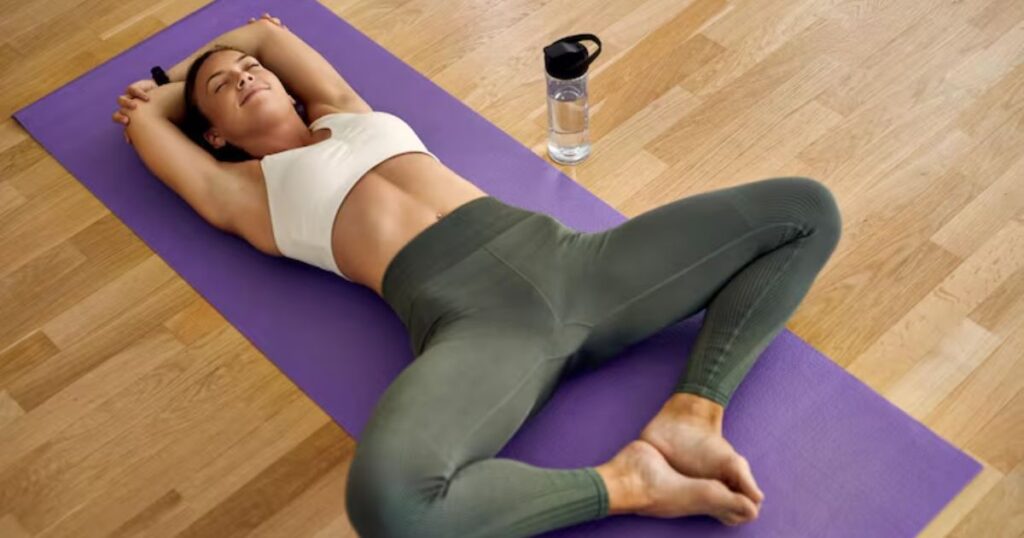
The most beneficial yoga poses for PCOS are those that stimulate circulation in the pelvic region, reduce cortisol, and improve insulin sensitivity. These include supported inversions like Legs Up the Wall, forward folds like Seated Forward Fold, twists like Supine Twist, and restorative postures like Reclined Butterfly.
Legs Up the Wall (Viparita Karani)
Reduces cortisol, improves circulation to the reproductive organs, and activates the parasympathetic nervous system. One of the most consistently recommended postures in therapeutic yoga for hormonal health.

Reclined Butterfly (Supta Baddha Konasana)
Opens the inner groin and stimulates the ovarian region. Held with breath awareness, it creates a combination of pelvic release and nervous system downregulation that is specifically useful for PCOS-related tension.
Seated Forward Fold
Stimulates the abdominal organs and improves circulation to the reproductive system. In Hatha practice, held for longer than in flow classes, the sustained hold increases the therapeutic effect.

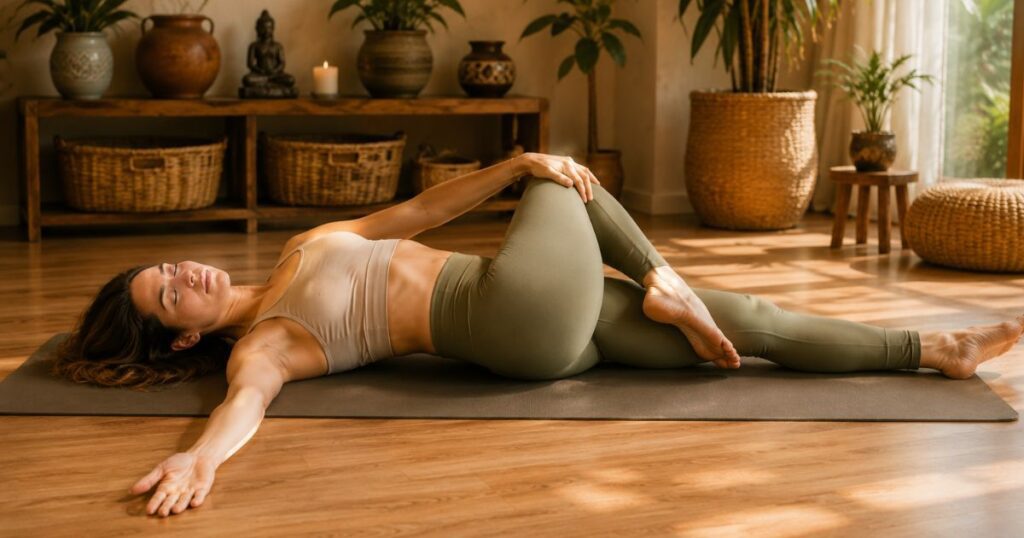
Supine Twist
Stimulates the digestive system and adrenal glands. Adrenal involvement is common in PCOS, particularly the adrenal androgen component, and twists are traditionally used in yoga to address this.
What Can’t Yoga Do for PCOS?
Yoga cannot normalise polycystic ovarian morphology, resolve insulin resistance in its more severe forms, or substitute for medical management of conditions like hyperandrogenism or infertility related to PCOS. It also cannot produce reliable results without consistency – a single session or occasional practice produces minimal hormonal benefit.
The conditions that respond least to yoga intervention are structural ones. If ovulation is absent due to severe hormonal disruption, yoga practice alone is unlikely to restore it. If insulin resistance is significant enough to require medication, yoga is a complement to that treatment, not an alternative.
It’s also worth noting that the research on yoga and PCOS, while growing and promising, is still limited by small study sizes and short intervention periods. The results are consistent enough to support recommending yoga as part of a management approach, but strong enough claims about specific outcomes should be held lightly. This broader, honest-about-limits framing is also reflected in yoga’s impact on women’s health, which covers where the evidence is strong and where it’s still developing.
How Often Should Women with PCOS Practice Yoga?
For PCOS management, three to five sessions of Hatha yoga per week, each lasting 45 to 60 minutes, is the frequency most consistently studied and supported. The 2026 Frontiers in Reproductive Health study used a daily yoga protocol, but three to four times per week showed comparable benefits in most measures.
Consistency over months matters more than daily intensity. A realistic, sustainable practice of three sessions a week, maintained for six months, will produce more measurable hormonal benefit than an intensive daily practice done for four weeks. The hormonal system responds to sustained signals, not short bursts.
Conclusion
Hatha yoga is a genuinely useful tool for managing PCOS – not because it cures the condition, but because it addresses several of the physiological mechanisms that drive its severity. Cortisol reduction, improved insulin sensitivity, pelvic circulation, and nervous system regulation are all areas where consistent yoga for female hormone balance produces documented benefit.
At Rudrakshaa Yogashala, the traditional Hatha approach and small class sizes make it possible to practice with the level of attention and modification that a condition like PCOS genuinely requires. If this is relevant to you, our hatha yoga classes in Singapore are a focused starting point, or you can browse sessions, check the schedule, or get in touch to speak with the teachers about your specific situation before starting.
Frequently Asked Questions
Can yoga regulate periods in women with PCOS?
Research suggests yes, with consistent practice. Studies have shown improvements in menstrual regularity in women with PCOS following 12-week yoga interventions. The mechanism is indirect – through cortisol reduction and improved insulin sensitivity – rather than a direct effect on the reproductive system. How significant the effect is depends on the severity of the underlying hormonal disruption.
Is high-intensity exercise better than yoga for PCOS?
Both have evidence, but they work differently. High-intensity exercise improves insulin sensitivity effectively but raises cortisol, which can worsen hormonal symptoms in women whose stress physiology is already dysregulated. Hatha yoga improves insulin sensitivity through a different pathway while simultaneously lowering cortisol. For women who show adrenal involvement in their PCOS, yoga tends to be better tolerated and produce fewer counterproductive hormonal effects.
Can yoga help with PCOS-related weight gain?
Indirectly, yes. Yoga for female hormone balance supports weight management in PCOS primarily by improving insulin sensitivity and reducing cortisol – both of which are significant drivers of PCOS-related weight gain. It also makes other lifestyle changes more sustainable by reducing stress. As a standalone weight loss intervention, it’s not particularly powerful, but as part of a broader approach, it contributes meaningfully.
Should I tell my yoga teacher I have PCOS?
Yes, particularly in a smaller class setting where the teacher can adapt the session. Certain modifications – more emphasis on restorative postures, avoiding very intense inversions during active menstruation, adjusting to your energy levels on different days of the cycle – are only possible if the teacher knows what they’re working with.
How long before yoga produces noticeable hormonal effects in PCOS?
Most studies show measurable changes in hormonal markers after 8 to 12 weeks of consistent practice. Subjective improvements in energy, sleep, and mood often come sooner. Don’t expect changes in androgen levels or menstrual regularity within the first few weeks – those take longer to shift, but the intermediate markers tend to move first.