
Traditional Hatha Yoga Sequence: 10 Classic Hatha Yoga Poses
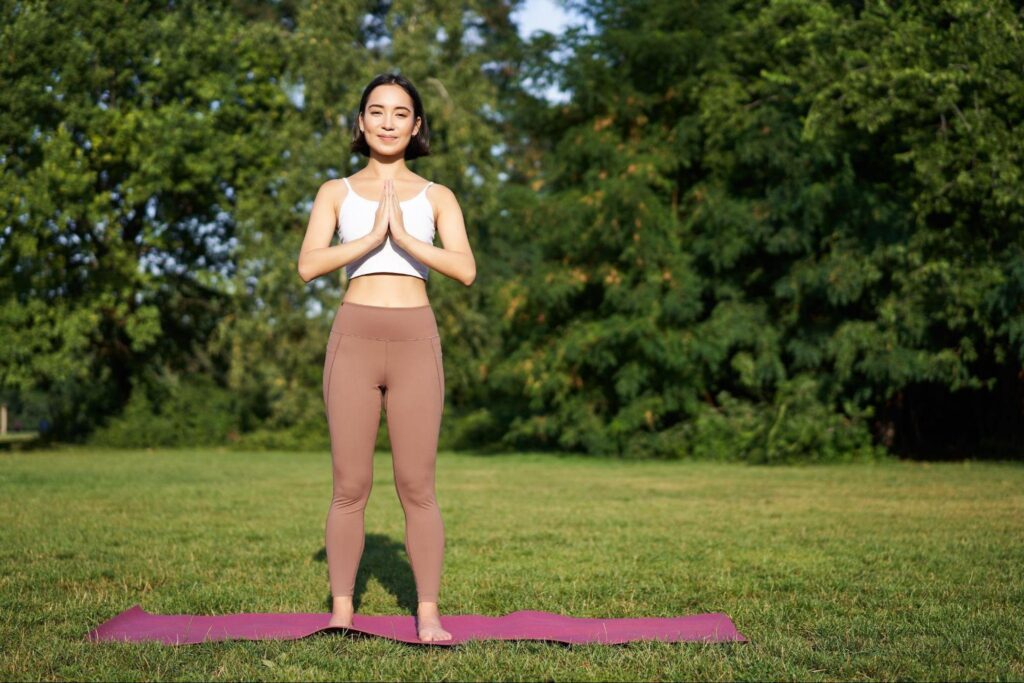
Traditional Hatha Yoga sequence prioritizes deliberate stability and structure over fast transitions. This foundational practice features 10 classic Hatha Yoga poses, from the grounding stability of Tāḍāsana (Mountain Pose) and the balancing focus of Vṛkṣāsana (Tree Pose), to the restorative lift of Setu Bandhāsana (Bridge Pose) and the deep release of Pādahastāsana (Standing Forward Fold).
These postures build physical endurance, promote spinal health, and cultivate the mental stillness required for true inner practice.
What is Traditional Hatha Yoga?
Traditional Hatha yoga is a system dedicated to unifying the physical and energetic components of being. The term Hatha itself is derived from Sanskrit:
- Ha: represents the Sun, symbolizing the active, heating, and masculine energy (Piṅgalā)
- Tha: represents the Moon, symbolizing the receptive, cooling, and feminine energy (Idā).
Hatha yoga’s primary goal is to balance these opposing energies within the body. This equilibrium is achieved through postures (āsana) and breathing techniques (prāṇāyāma). This practice emphasizes holding postures for an extended duration to build deep endurance, promoting steadiness rather than flowing quickly between sequences.
The Role of Hatha in a Modern Context
Hatha yoga’s slow, deliberate sequence provides a necessary balance in a world of constant digital stimulation and urgency.
- Mental Anchor: By requiring focused attention on alignment and breath while holding a posture, Hatha Yoga trains the mind to resist distraction and find a centered and calm state. This active concentration develops mental discipline.
- Injury Prevention: The slow pace of Hatha practice teaches precise body awareness and correct alignment in each pose. This foundation is an adequate safeguard against injury, especially when transitioning to faster-paced classes like Vinyasa. For those already experiencing postural pain or discomfort from prolonged sitting or desk work, our posture correction yoga workshop offers targeted therapeutic support to realign the spine and relieve pain.
- Stress Reduction: The methodical tempo of the Hatha sequence naturally shifts the body out of the sympathetic nervous system’s “fight or flight” mode. This allows the parasympathetic nervous system to take over, helping soothe your body and restore equilibrium.
10 Classic Hatha Yoga Poses
These 10 classic Hatha Yoga poses are often included in a complete, full-body Hatha sequence. They balance strength, flexibility, and relaxation in sequence, establishing the stable foundation required for a lasting yoga practice.
1. Tāḍāsana: The Foundation of Standing Stability
Tāḍāsana, or Mountain Pose, is the fundamental standing posture from which all other standing āsanas begin. This basic Hatha yoga pose corrects posture, promotes spinal realignment, and establishes foundational standing stability.
How to Perform this Hatha Yoga Sequence
- Stand: Begin standing with your feet together or hip-width apart.
- Ground: Actively root down by pressing firmly into the four corners of your feet.
- Engage: Contract your thigh muscles (quadriceps) to lift your kneecaps slowly.
- Lengthen: Draw your tailbone slightly down, lengthen your spine, and imagine the crown of your head reaching upward.
- Shoulders: Move your shoulder blades slightly back and down the spine, letting your hands hang naturally by your hips with the front of the palms facing forward.
- Hold: Maintain the posture, keeping the breath steady and evenly distributing the weight.
2. Vṛkṣāsana: Cultivating Balance and Focus
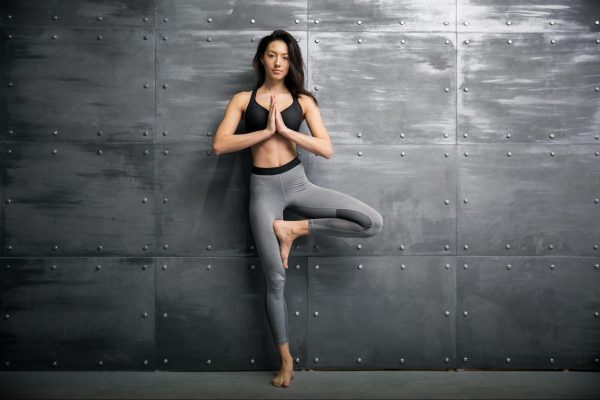
Vṛkṣāsana, or Tree Pose, is a beginner Hatha yoga pose that cultivates steadiness that improves concentration and strengthens the stabilizing muscles of the ankle and foot.
How to Perform this Hatha Yoga Sequence
- Foundation: Begin standing in Tāḍāsana, shifting your weight onto your left foot.
- Lift: Bend your right knee and use your hand to bring the sole of your right foot up.
- Place: Place the sole of your right foot firmly against your inner left thigh or calf, avoiding the knee joint.
- Balance: Fix your drishti (gaze point) on a stable, unmoving object in front of you.
- Hands: Bring your hands together at your heart center (Anjali Mudra), or extend them overhead.
- Hold: Maintain the posture while focusing on your balance and slow, steady breath.
- Release: Lower the right foot and repeat the sequence on the opposite side.
3. Pādahastāsana: Releasing the Hamstrings and Spine
Pādahastāsana, or Standing Forward Fold, is a beginner Hatha Yoga sequence designed to stretch the entire back line of the body. It compresses the abdomen, aiding digestion, and lengthens the entire back body.
How to Perform this Hatha Yoga Sequence
- Stand: Begin standing, feet hip-width or together.
- Hinge: Exhale and hinge deeply from the hips, keeping the spine long. Avoid rounding the lower back.
- Bend Your Knee: Keep a slight micro-bend in the knees if your hamstrings feel tight.
- Hold: Bring your hands to the floor, ankles, or shins.
- Relax: Relax your neck, letting the crown of your head release toward the floor.
- Sustain: Hold the fold for several breaths, using the exhale to deepen the stretch.
4. Trikoṇāsana: Expanding the Chest and Side Body
Trikoṇāsana, or Triangle Pose, is an expansive side-stretching Āsana. This standing yoga pose opens the hips and chest while toning the obliques.
How to Perform this Hatha Yoga Sequence
- Stance: Step your feet wide apart, turning your front foot out 90 degrees and your back foot slightly inward.
- Arms: Extend your arms straight out to the sides, parallel to the floor.
- Hinge: Inhale, then exhale as you reach your front hand forward, hinging from the front hip.
- Fold Sideways: Lower your front hand to rest on your shin, ankle, or the floor outside your foot.
- Alignment: Extend your top arm toward the ceiling, stacking your shoulders. Imagine your body is flat between two walls.
- Gaze: Look up or keep your gaze straight ahead.
- Hold: Maintain the posture while keeping the side body long.
- Release: Inhale to rise back up and repeat on the other side.
5. Virabhadrasana II: Building Stamina and Heat
Virabhadrasana II, or Warrior II Pose, is a strong standing posture that develops physical strength and opens the hips. Holding this āsana builds leg muscle endurance and actively opens the hips.
How to Perform this Hatha Yoga Sequence
- Stance: Step your feet wide, turning your front foot out 90 degrees and your back foot slightly inward.
- Bend Your Knee: Exhale and bend your front knee, keeping it directly over the ankle.
- Hips: Keep your hips open, facing the long edge of your mat.
- Arms: Extend your arms straight out to the sides, parallel to the floor, actively reaching in opposite directions.
- Gaze: Gaze over the fingertips of your front hand.
- Hold: Maintain the strong bend in the front knee and keep the back leg energized.
- Release: Straighten the front leg and repeat the sequence on the other side.
6. Adho Mukha Śvānāsana: The Ultimate Full-Body Reset
Adho Mukha Śvānāsana, or Downward-Facing Dog, is an inversion that simultaneously lengthens and strengthens the body. It decompresses the spine, strengthens the shoulders, and helps to calm your mind.
How to Perform this Hatha Yoga Sequence
- Start: Begin on your hands and knees (Tabletop position).
- Hands: Spread your fingers wide and press firmly into your palms and knuckles.
- Lift: Tuck your toes and lift your hips toward the ceiling.
- Length: Focus on lengthening your spine, lifting your sit bones high.
- Legs: Slowly move your heels toward the floor; keep your knees slightly bent, if needed, to maintain spinal length.
- Head: Let your head hang naturally between your upper arms.
- Hold: Maintain the posture while breathing deeply.
7. Bhujangāsana: Opening the Heart and Lungs
Bhujangāsana, or Cobra Pose, is a backbend performed lying on the abdomen that helps in counteracting prolonged slouching by strengthening the upper back and opening the chest and lungs.
How to Perform this Hatha Yoga Sequence
- Lie Down: Lie face down on the floor with your legs extended.
- Hands: Place your palms flat beneath your shoulders, keeping your elbows close to your body.
- Ground: Press your pelvis and the tops of your feet firmly into the floor.
- Lift: Inhale and engage your back muscles to lift your chest off the floor slowly. Use your hands only for light support.
- Gaze: Keep your gaze soft and slightly down to maintain a long neck.
- Hold: Hold the gentle backbend for a few breaths.
- Release: Exhale and slowly lower your chest back to the floor.
8. Śalabhāsana: Strengthening the Lower Back
Śalabhāsana, or Locust Pose, is a basic Hatha yoga pose performed lying on the abdomen. Practicing this Hatha sequence relieves built-up tension in the back and calms the mind, preparing the body for final relaxation.
How to Perform this Hatha Yoga Sequence
- Lie Down: Lie face down with your arms resting alongside your body, palms facing down.
- Engage: Press your forehead or chin lightly onto the floor and engage your glutes.
- Lift: Inhale and, using the strength of your back muscles, simultaneously lift your chest, arms, and legs off the floor.
- Reach: Actively reach your fingertips toward your feet, then back and up.
- Gaze: Keep your neck long by maintaining your gaze down toward the floor.
- Hold: Hold the posture for a brief duration.
- Release: Exhale and lower everything back down.
9. Dhanurāsana: Deepening the Backbend
Dhanurāsana, or Bow Pose, is an intense backbend that provides a deep stretch for the front body. This āsana provides an intense stretch for the front body, including the hip flexors and chest, and massages the abdominal organs.
How to Perform this Hatha Yoga Sequence
- Lie Down: Lie face down on your abdomen.
- Grasp: Bend your knees and reach back to grasp your ankles or shins.
- Lift: Inhale, and pull your feet away from your torso, while lifting your chest and thighs.
- Balance: Balance on the soft part of your abdomen.
- Gaze: Keep your gaze forward.
- Hold: Hold the intense backbend for a few steady breaths.
- Release: Exhale and lower the body back down, releasing the ankles.
10. Setu Bandhāsana: Calming the Mind and Lifting the Hips
Setu Bandhāsana, or Bridge Pose, is a mild inversion that is both opening and restorative, preparing the body for rest. Performing this Hatha sequence relieves built-up tension in the back and settles the brain, preparing the body for final relaxation.
How to Perform this Hatha Yoga Sequence
- Lie Down: Lie on your back with your knees bent and feet flat on the floor, hip-width apart.
- Feet: Position your feet so your fingertips lightly graze your heels.
- Lift: Inhale, press firmly into your feet, and lift your hips and tailbone toward the ceiling.
- Align: Keep your knees directly over your ankles.
- Shoulders: Roll your shoulders under and, if desired, clasp your hands beneath your back for support.
- Hold: Maintain the posture while breathing smoothly and steadily.
- Release: Exhale, then gently return your hips to the floor, rolling down slowly through each segment of the spine.
Join Our Hatha Yoga Course for Beginners
The traditional Hatha Yoga sequence, with its emphasis on holding poses for endurance and correct form, benefits greatly from precise guidance. Proper, safe alignment, particularly in a practice designed for lasting stability, also needs the trained eyes and individualized feedback of an experienced teacher.
Rudrakshaa Yogashala offers a supportive environment where yoga beginners can benefit from private yoga lessons. We also offer a dedicated Hatha yoga course for beginners who are interested in mastering basic Hatha Yoga poses.
Join our basic yoga classes to build a strong foundation.
If you’re looking to deepen your practice and share yoga with others, explore our 200-hour yoga teacher training. Schedule a yoga session today.


