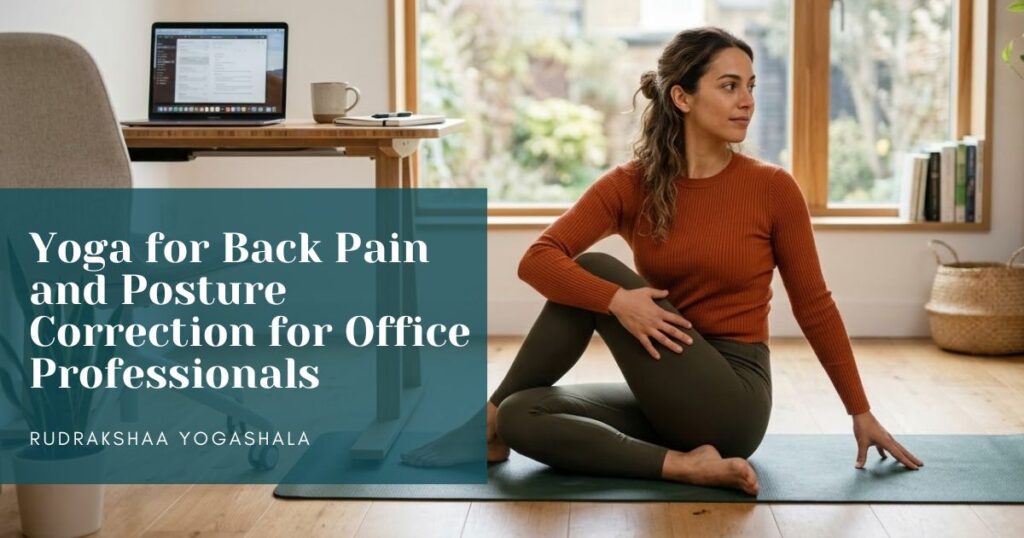

Most office professionals don’t notice their posture deteriorating until something starts hurting. It happens gradually. A few hours hunched over a laptop becomes a habit. Shoulders round forward. The lower back stiffens. The neck starts aching by mid-afternoon. And what began as occasional discomfort quietly becomes a daily reality.
Sitting for extended periods does real damage over time, not because sitting is inherently harmful, but because most people do it badly and for too long without moving. Tight hips, a weak core, rounded shoulders, and forward head posture are almost universal among desk workers, and they don’t resolve on their own.
Yoga addresses this in a way that most other interventions don’t. It works on strength and flexibility simultaneously, builds body awareness that carries into everyday movement, and doesn’t require equipment, a gym membership, or large blocks of time. For office professionals dealing with back pain or posture issues, it’s one of the most practical tools available. Many are already turning to pain relief yoga Singapore programs to counter exactly this kind of physical strain.
Why Office Work Creates Back Problems
Understanding what’s actually happening in the body makes it easier to address.
- Prolonged sitting compresses the lower spine and progressively weakens the muscles responsible for supporting it. Sit for eight hours a day, five days a week, and those muscles don’t just weaken; they essentially forget what they’re supposed to do.
- Forward head posture is another common issue. Leaning toward a screen or looking down at a phone shifts the head forward from its natural position over the spine. For every inch the head moves forward, the effective load on the cervical spine roughly doubles. Neck and upper back pain follow predictably.
- Hip flexors shorten when they’re held in a flexed position for hours at a time. Short hip flexors pull the pelvis forward, which tilts the lower back into an unnatural curve and contributes directly to lumbar pain.
- Weak core muscles leave the spine without adequate support. When the core isn’t doing its job, other muscles compensate in ways they weren’t designed to, and those compensations eventually show up as pain.
Yoga exercises for posture correction work on all of these simultaneously, which is why the results tend to be more lasting than stretching alone.
Is Yoga Helpful for Back Pain?
For most people dealing with the kind of back pain that comes from desk work, yes.
Yoga isn’t a high-impact intervention. It works through controlled movement, attention to alignment, and breath awareness. That combination releases muscular tension while building strength in a balanced, progressive way. It doesn’t load the spine unevenly, the way some gym exercises can.
The reason yoga works particularly well for back pain is that it addresses both sides of the problem at once. Back pain almost always involves some muscles that are too tight and others that are too weak. Stretching without strengthening, or strengthening without stretching, gives partial results at best.
Regular pain relief yoga Singapore practice gradually restores that balance. Tight muscles release. Weak muscles start pulling their weight. The spine starts moving more freely, and the body starts to feel less like something you’re managing and more like something that’s working with you.
There’s also the awareness piece. People who practice yoga regularly start noticing their posture during the day, catching themselves before bad habits settle in.
Can Yoga Actually Fix Your Posture?
It can make a significant difference, and for many people it has.
Poor posture develops through repetition. The same positions, day after day, train the body to treat those positions as normal. The muscles that hold you in a rounded, forward-leaning position get chronically shortened. The muscles that should hold you upright get chronically lengthened and weakened. Over time, standing or sitting with good posture starts to feel effortful and unnatural.
Yoga exercises for posture correction work against this pattern in three ways.
They strengthen the muscles that support upright posture, particularly in the upper back, shoulders, and core. They stretch the muscles that have shortened from years of desk work, particularly the chest, hip flexors, and neck. And they develop the body awareness needed to actually notice when posture is slipping and correct it before the compensation patterns deepen.
The combination of those three things is what produces lasting change, not just temporary relief.
What About Long-Standing Posture Problems?
This is a fair question. If someone has spent decades sitting poorly, can yoga realistically make a difference?
Honestly, yes, though it takes longer and requires more consistency than correcting a recent habit. The body is more adaptable than most people give it credit for. Muscles that have shortened can lengthen. Muscles that have weakened can strengthen. Movement patterns that have become automatic can be retrained.
What yoga brings to this process is a gradual, consistent input in the right direction. Each session reinforces better alignment and builds more support in the structures that hold the spine upright. Over months, those small inputs accumulate into noticeable change.
Most people who commit to a regular pain relief yoga Singapore practice report meaningful improvements in posture, mobility, and comfort within a few months, even those who assumed their bodies were too set in their ways to respond.
Can You Fix 30 Years of Bad Posture with Yoga?
This is a common concern, especially for people who have spent decades in desk-bound roles. The short answer is: you can significantly improve it, even if “perfect” posture isn’t the end goal.
Posture issues that develop over 20–30 years are deeply ingrained in muscle memory. Certain muscles (such as the chest and hip flexors) become chronically tight, while others (such as the upper back and core) weaken over time. However, the body remains adaptable well into later years.
Yoga exercises for posture correction gradually reverse these patterns. With consistent practice, tight muscles begin to release, weak muscles regain strength, and alignment improves. More importantly, yoga builds awareness—so you stop reinforcing poor posture throughout the day.
For long-standing posture problems, progress may be slower, but it is absolutely possible. Many people notice reduced stiffness, better alignment, and less pain within a few months of regular practice. Over time, these small improvements compound into meaningful, lasting change.
What are the Big 3 Exercises for Lower Back Pain?
Physiotherapists frequently recommend three foundational movements for lower back stability: the bird dog, the side plank, and the modified curl-up. Each targets the deep stabilising muscles of the spine without overloading it.
Yoga incorporates all three principles naturally.
- Bird dog pose builds core stability and spinal control through contralateral movement.
- Side plank strengthens the lateral musculature that supports the spine from the sides.
- Modified curl-up variations in yoga strengthen the abdominals without the spinal flexion load that traditional sit-ups create.
Including these movements in a yoga practice gives you the structural benefits of physiotherapy-based core training within a format that also addresses flexibility, breathing, and body awareness.
Which Style of Yoga Works Best for Back Pain?
Not all yoga styles are equally suited to back pain and posture work. A few stand out.
- Hatha yoga is a good starting point. The pace is slow enough to focus on alignment, and the poses are accessible for people who are new to yoga or returning after an injury.
- Iyengar yoga is worth considering if posture correction is a specific goal. It emphasises precise alignment and uses props to support the body into correct positions, which is particularly useful for retraining movement patterns that have drifted over the years.
- Yin yoga targets the deep connective tissues rather than the muscles, making it effective for releasing the chronic tightness that accumulates around the spine and hips.
- Restorative yoga focuses on decompression and recovery. For people in active pain or with significant fatigue from compensation patterns, restorative sessions give the spine and nervous system a genuine chance to reset.
Poses That Make a Real Difference
A handful of poses consistently show up in yoga exercises for posture correction programs, and for good reason.
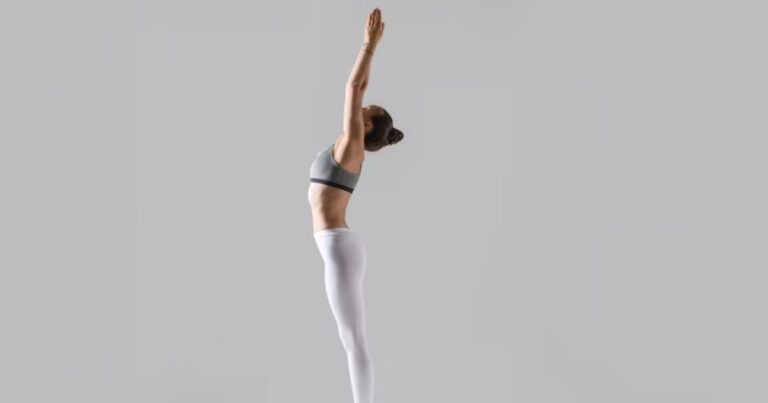
Mountain Pose (Tadasana)
Mountain Pose (Tadasana) is deceptively simple. It teaches what proper standing alignment actually feels like, which most desk workers have genuinely lost touch with. Done attentively, it recalibrates the whole postural system.
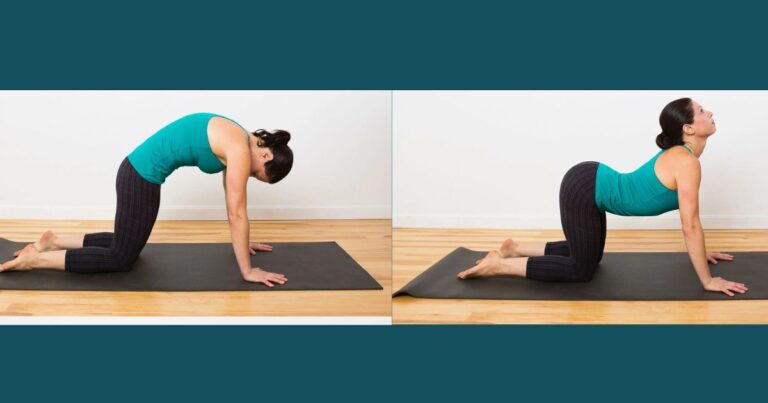
Cat-Cow Stretch
Cat-Cow Stretch mobilises the spine through its full range of flexion and extension. For people whose spines have become stiff from hours of static sitting, this movement alone provides noticeable relief.
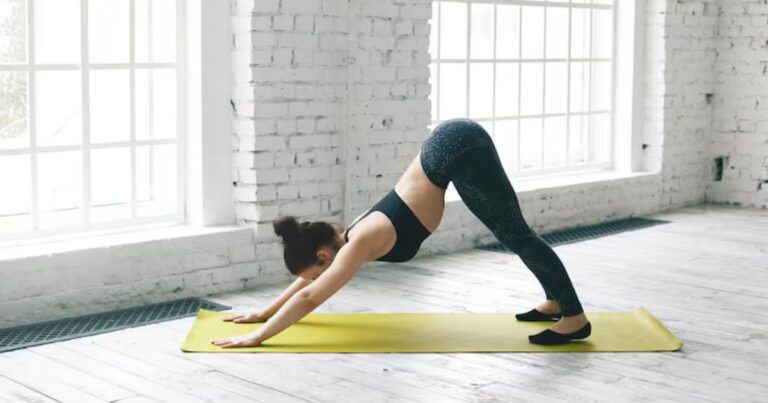
Downward Dog
Downward Dog decompresses the spine, stretches the hamstrings and calves that pull on the lower back, and builds shoulder stability simultaneously.
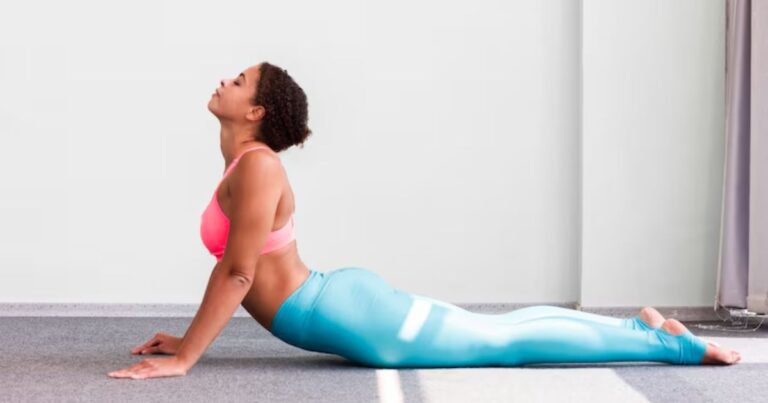
Cobra Pose
Cobra Pose counteracts the forward rounding that desk work produces. It strengthens the spinal extensors and opens the chest, directly addressing the two most common postural problems in office workers.
Child’s Pose
Child’s Pose gently stretches the lower back and hips and gives the nervous system a chance to downregulate. After a long day of sitting, it’s one of the most immediately relieving postures available.
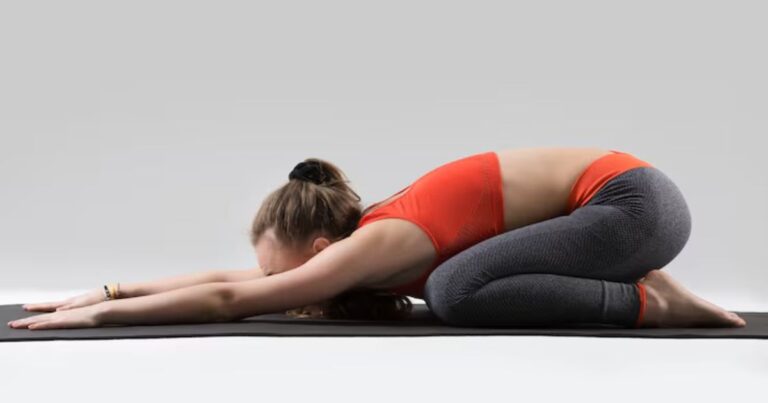
These poses appear regularly in pain relief yoga Singapore classes because they target exactly what desk workers need.
A Simple Daily Routine for Office Workers
The barrier most people hit with yoga is time. The good news is that you don’t need an hour to get meaningful benefits.
A fifteen-minute morning or evening routine that includes Cat-Cow to warm up the spine, Downward Dog to stretch the back and shoulders, Cobra to open the chest, Child’s Pose for relaxation, and a few minutes of slow and mindful breathing is enough to make a real difference if done consistently.
Yoga exercises for posture correction don’t need to be elaborate. They need to be regular. Ten focused minutes done daily will outperform an occasional hour-long session whenever the goal is changing ingrained postural habits.
For people with more significant or persistent discomfort, structured pain relief yoga sessions in Singapore offer additional guidance and accountability that’s harder to maintain in a solo home practice.
The Longer-Term Picture
Yoga’s benefits for back pain and posture aren’t just about feeling better in the short term. Consistent practice changes the underlying conditions that cause the problems in the first place.
Core and back muscles get stronger. Flexibility and mobility improve. Muscle imbalances that have been driving compensatory patterns are gradually evened out. Alignment improves. Stress, which has a direct effect on muscular tension, decreases.
For office professionals spending the majority of their waking hours in a seated position, these changes accumulate into something genuinely significant over months and years. The body becomes more resilient, better supported, and less prone to the aches that used to be a daily given.
Yoga exercises for posture correction aren’t a quick fix. But they are a sustainable one.
Conclusion
Back pain and poor posture have become almost occupational hazards for anyone who works at a desk. The physical demands of office work are easy to underestimate because they’re passive, but the cumulative effect on the spine is anything but.
Yoga offers a practical, accessible, and genuinely effective response. Through strengthening, stretching, and building body awareness to maintain better alignment during the day, yoga exercises for posture correction address the problem at its source rather than just managing symptoms.
For professionals who want a long-term solution rather than a temporary fix, the Posture Correction & Pain Relief Yoga Workshop in Singapore is a focused starting point, or you can view the schedule to explore all available sessions.
The back that’s been complaining for years can improve. It just needs the right consistent input.
Frequently Asked Questions
How often should I practice yoga for back pain relief?
Three to four times a week tends to produce noticeable results for most people. That said, even a short daily practice will outperform less frequent, longer sessions when posture correction is the goal.
Is yoga safe for chronic back pain?
For most people, gentle yoga is both safe and beneficial. Anyone with a diagnosed spinal condition or severe pain should check with a healthcare professional before starting yoga exercises for posture correction, just to make sure the approach is appropriate for their specific situation.
Can yoga replace physiotherapy?
For some people, yoga provides enough correction on its own. For others, it works best as a complement to physiotherapy rather than a replacement. Combining B routines with professional treatment tends to produce the best outcomes for more significant structural issues.
How long before posture actually improves?
Many people notice a difference within a few weeks of consistent practice, particularly in how their body feels during the day. More significant postural changes typically take several months of regular yoga exercises for posture correction to become visible and habitual.
Can beginners start yoga for back pain?
Yes, and many of the most effective poses for back pain are also among the most beginner-friendly. Starting gently and building gradually is exactly the right approach, and most pain relief yoga Singapore classes are designed to accommodate people at all experience levels.