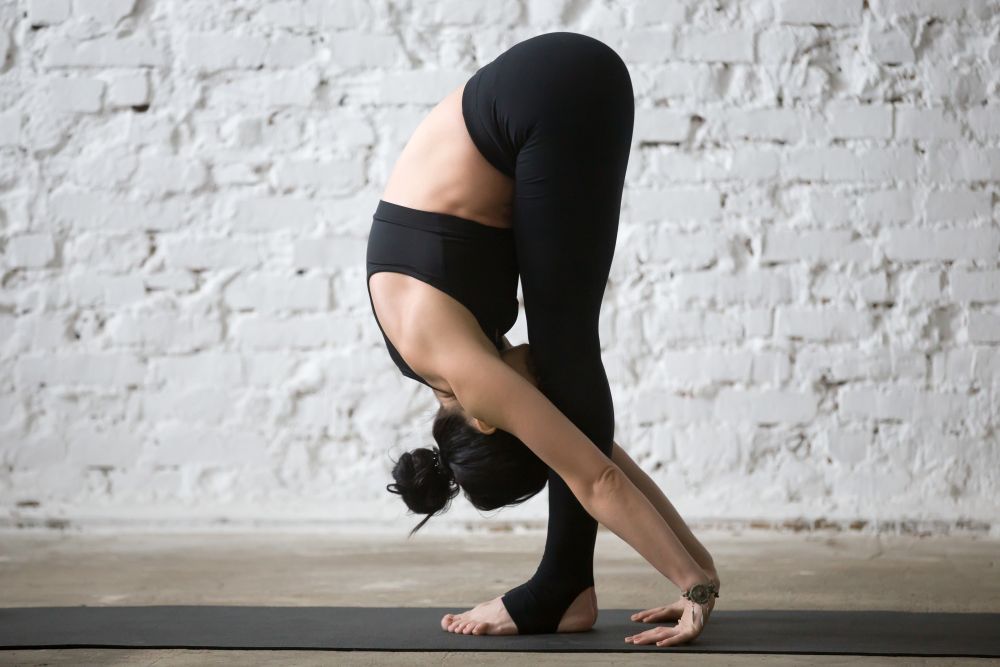

Uttānāsana, often translated as the “intense stretch pose,” is a foundational asana that focuses on elongating your posterior chain, a vital line of energy and muscle stretching from your heels to the crown of your neck.
In this posture, gravity provides the necessary traction to deepen the fold. Because of this, it remains one of the most accessible yet effective inversions for beginners. By surrendering to the pull of the earth, you can experience a release in the spine while temporarily reversing the typical flow of circulation.
What Are the Benefits of Uttānāsana?
The practice of Uttānāsana nourishes the whole being, offering a sanctuary for both the physical and energetic bodies. Taking yoga classes to learn this pose helps you on three primary levels: muscular, nervous, and organic, supporting a holistic approach to wellness.
Physical Flexibility & Strength
- Lengthening the Posterior Chain: This standing forward bend stretches your hamstrings and calves, while the weight of your head creates natural traction that decompresses and realigns the spinal vertebrae.
- Building Lower Body Stability: To safely perform the Uttānāsana pose, engage your quadriceps by lifting your kneecaps. Consequently, the pose protects your hamstrings while building significant strength in your thighs and core.
Stress Reduction
- The Inversion Effect: Placing the head below the heart in a forward fold yoga pose increases oxygenated blood flow to the brain, which helps rejuvenate cells and sharpen mental alertness.
- Nurturing the Nervous System: Uttānāsana signals the parasympathetic nervous system to activate, helping you calm your mind and release deep-seated tension in the neck and shoulders.
Improved Circulation & Digestion
- Organic Massage: Folding the torso over the legs creates a “compress and release” mechanism that massages the liver, spleen, and kidneys, key organs for detoxification.
- Energy Flow: Another benefit of this standing forward bend pose is improved overall circulation and venous return from the legs to the heart, helping you feel more energized.
Posture Improvement
- Undoing the Desk Hunch: Modern life often leads to a compressed lower back, but Uttānāsana allows the spine to hang straight, helping to correct postural imbalances and promote better alignment.
- Spinal Decompression: Since the pose helps realign the spine, you’re reducing the physical strain on your neck and shoulders that typically comes from prolonged sitting.
Therapeutic Benefits
- Holistic Support: Practicing Uttānāsana may help address asthma, sinusitis, and insomnia by improving lung function through breathing techniques and promoting a restful state for better sleep.
- Supporting Body Resilience: For those concerned about osteoporosis, the pose’s weight-bearing nature may strengthen the legs.
9 Uttānāsana Preparatory Poses
Achieving a standing forward bend requires both open hamstrings and a released lower back. Therefore, you need to practice these preparatory poses to build the necessary flexibility while preventing common injuries such as muscle pulls or strains:
1. Ardha Uttānāsana (Half Standing Forward Fold)
Often called the “flat back” reset, this Uttānāsana variation teaches you to maintain a straight spine and lengthen before transitioning into a full fold.
Instructions:
- Begin by standing tall in Tādāsana.
- Inhale as you lift your chest until your torso is parallel to the floor.
- Place your hands gently on your shins or thighs, avoiding direct pressure on your knees.
- Simultaneously lengthen the crown of your head forward and reach your tailbone back to extend the spine.
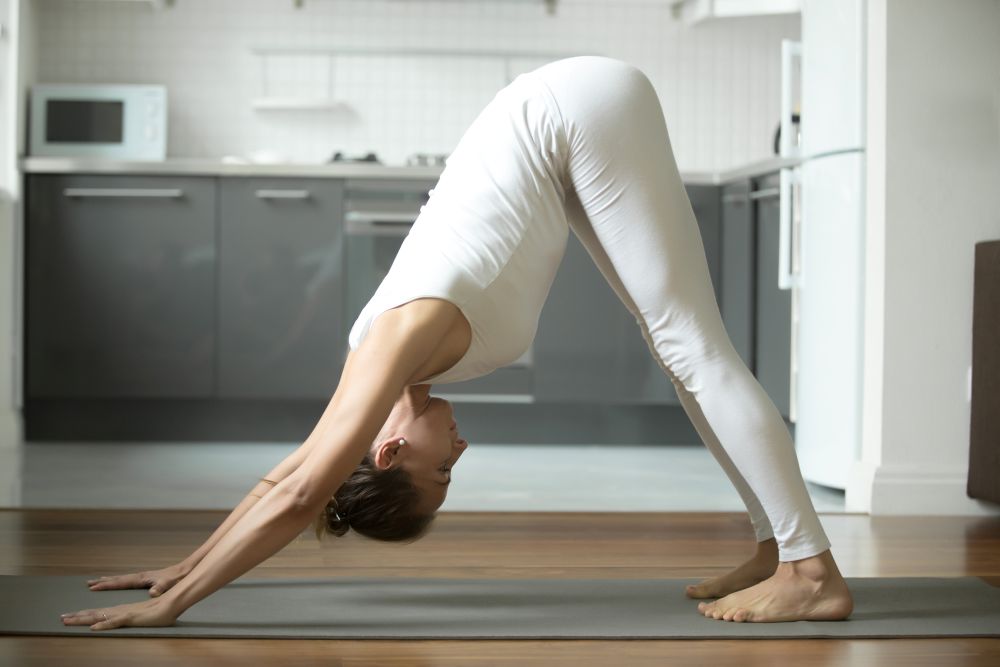
2. Adho Mukha Svanasana (Downward-Facing Dog)
This classic forward fold yoga pose is a partial inversion that engages the entire posterior chain and gently prepares your legs and back for deeper folds.
Instructions:
- Start on your hands and knees in a tabletop position.
- Tuck your toes under, and then create an inverted “V” shape by lifting your hips high toward the ceiling.
- Press your chest toward your thighs and encourage your heels to sink toward the mat.
- Outwardly rotate your upper arms to broaden your shoulders and create space for your neck.
3. Tādāsana (Mountain Pose)
A mindful Uttānāsana pose begins with a solid foundation. This neutral standing yoga pose provides essential grounding and alignment for a safe descent.
Instructions:
- Stand with your big toes touching and your heels slightly apart.
- Gently lift your kneecaps to engage your quadriceps, which helps support your legs.
- Roll your shoulders back and down.
- Keep your chin parallel to the floor and maintain a steady gaze.
4. Paschimottanasana (Seated Forward Bend)
Sharing the same shape as Uttānāsana, this seated variation provides greater lower-back stability, as the floor supports the spine.
Instructions:
- Sit while ensuring your upper body is upright, and your legs are extended straight in front of you.
- Inhale as you reach your arms upward, then exhale to hinge from your hips.
- Hold onto your shins or feet.
- Keep your spine long and extended rather than allowing it to round.
5. Malasana (Squat Pose)
Because tight hips often pull on the lower back and restrict your forward fold pose, this grounding squat releases deep-seated tension, allowing for a freer descent.
Instructions:
- Stand with your feet wider than your hips, and your toes turned outward.
- Exhale as you squat down deeply toward the earth.
- Bring your hands to a prayer center and use your elbows to press your knees open.
- Keep your chest lifted and your spine vertical.
6. Urdhva Hastasana (Upward Salute/Volcano Pose)
To deepen your Uttānāsana pose, you must first create space in the torso. By practicing this upward reach, you can have the necessary length to fold more effectively.
Instructions:
- From Tādāsana, inhale and sweep your arms overhead.
- Interlace your fingers or keep your palms facing one another.
- Look up to stretch the belly and ribcage.
7. Balasana (Child’s Pose)
This passive stretch gently rounds the spine, offering a restorative way to prepare your body for the intense flexion required in a full standing forward bend.
Instructions:
- Kneel on the mat with your knees spread wide and your big toes touching.
- Sit your hips back onto your heels.
- Walk your hands forward on the mat and rest your forehead on the floor.
8. Utkatasana (Chair Pose)
Activating the legs creates “reciprocal inhibition,” where engaging the quadriceps encourages the opposing hamstrings to naturally relax and release.
Instructions:
- From Tādāsana, bend your knees and sit back as if lowering into an invisible chair.
- Reach your arms up alongside your ears.
- Shift your weight into your heels to maintain balance and strength.
9. Runner’s Lunge (Utthita Ashwa Sanchalanasana)
This pose isolates one leg at a time to deeply stretch the hip flexors and hamstrings, providing the targeted opening needed for a safe Uttānāsana pose.
Instructions:
- From Downward-Facing Dog, step your right foot forward between your hands.
- Keep your back leg straight and strong, lifting the back knee.
- Sink your hips low while keeping your chest reaching forward.
- Repeat the movement on the other side.
Experience the Full Benefits of Proper Form
More than touching your toes, Uttānāsana is a mindful journey of surrender. And remember, don’t force your hands to the floor, as this can lead to strain.
However, with proper adjustments from a knowledgeable instructor, you can safely find your natural depth. At Rudrakshaa Yogashala, we can help you build this essential foundation through our basic yoga classes. You can also sign up for our Hatha Yoga course for beginners, where small group settings ensure personalized care.
Join our yoga classes to improve your flexibility and gain better posture.
Frequently Asked Questions
What muscles does Uttanasana stretch?
Uttanasana primarily targets the entire posterior chain, deeply stretching the hamstrings, calves, and glutes. It also provides a significant release for the erector spinae muscles along the back and the connective tissue (fascia) from the heels to the base of the skull.
Is forward fold good for beginners?
Yes, it is a foundational pose that introduces beginners to the relationship between their breath and their hamstrings. It’s highly accessible because it can be modified easily with blocks or bent knees to suit any initial flexibility level.
Does forward bending help back pain?
It can relieve tension in the lower back by decompressing the spine, but only if performed with a flat back and engaged core. If you “slump” into the fold, you may actually increase pressure on your spinal discs, so focus on hinging from the hips.
Why are my hamstrings tight in forward fold?
Hamstring tightness is often a protective response from the nervous system or a result of prolonged sitting. In a forward fold, your brain may “lock” the muscles to prevent overstretching the sciatic nerve, which is why progress requires patience and consistent, gentle practice.
Do you need to be flexible to do yoga?
No—saying you’re too stiff for yoga is like saying you’re too dirty to take a bath. Yoga is the tool you use to gain flexibility. Every pose, including Uttanasana, has “stages” that make it effective for even the most inflexible bodies.
Why is forward fold difficult?
It is difficult because it requires the simultaneous relaxation of the back body and the active engagement of the front body (quadriceps and core). Most people struggle because they try to reach the floor by rounding their spine instead of hinging at the hip joints.
Should you bend your knees in a forward fold?
Absolutely. Bending the knees is the best way for beginners to protect their lower back and ensure the stretch stays in the “belly” of the hamstrings rather than pulling on the tendons at the sit-bones or behind the knees.
Is forward fold bad for the lower back?
It is only “bad” if you have a herniated disc or if you round your lower back excessively while keeping your legs straight. By keeping a slight bend in the knees and maintaining a long spine, you transform the pose from a risk into a therapeutic stretch.
Does an inversion increase blood flow to the brain?
Yes. Because Uttanasana brings your head below your heart, it utilizes gravity to assist blood flow to the brain. This “mini-inversion” increases oxygenation, which can help clear mental fog and improve cognitive function.
Does forward fold calm the mind?
Yes, forward folds are neurologically “introverting.” They stimulate the vagus nerve and reduce sensory input, shifting your body into the parasympathetic nervous system (rest-and-digest) and helping to quiet a racing or anxious mind.
How to prepare for Uttanasana?
Warm up with dynamic movements like Sun Salutations or gentle “pedaling” of the feet in Downward Dog. This increases blood flow to the hamstrings and lubricates the hip joints, making the deep fold of Uttanasana much smoother and safer.
How often should I practice forward fold?
For noticeable results in flexibility and stress management, practice forward folds daily. Even spending 2–3 minutes in a relaxed version of the pose can counteract the tightness caused by a day of sitting at a desk.
How long does it take to improve flexibility in yoga?
While you may feel “looser” after one class, permanent changes in muscle length and nervous system tolerance usually take 4 to 8 weeks of consistent practice. Flexibility is a gradual adaptation, not an overnight fix.