
Many of us carry the weight of stress and anxiety that dims our focus and drains our vitality. This persistent hum of “doing” engages the nervous system, the body’s command center for managing reactions to everyday challenges.
Yoga helps to regulate these responses, guiding the body toward a state of steadiness and ease. Through intentional poses such as Seated Forward Bend, Fish Pose, and Supported Bridge Pose, proper alignment and breathing can calm the nervous system.
How Does Yoga Relieve Stress?
Stress relief through yoga poses goes far beyond simply “feeling relaxed” after class. Instead, the practice influences biological systems that shape how the body processes and responds to tension.
Releases Deep-Seated Somatic Tension
Emotional strain does not live only in the mind; it is also stored in the body as long-held neuromuscular tension patterns. This is often experienced as tight shoulders, a clenched jaw, or stiffness through the hips and back.
When yoga postures are held with steady breath, these areas begin to lengthen. As a result, the body receives cues that it no longer needs to brace for “fight or flight,” which supports a gradual unwinding of physical tension.
Stimulates the Vagus Nerve and Relaxation Response
The parasympathetic nervous system, often referred to as “rest and digest,” helps the body slow down and conserve energy. This network of nerves is closely connected to the vagus nerve, a key communication pathway between the brain and major organs, including the heart and lungs.
As we slow the breath and steady our awareness, this nerve sends a ripple of calm through the heart and lungs. The heart rate begins to slow, the breath deepens, and the body shifts from a state of alert into a more restorative state.
Reduces Systemic Inflammation and Cortisol
Beyond muscular release and nervous system balance, yoga also supports helpful chemical shifts within the body. Chronic stress tends to elevate cortisol levels, which can lead to increased inflammation over time.
Consistent yoga practice, however, has been associated with lower levels of inflammatory markers such as cytokines. At the same time, mindful movement and breath awareness support healthier cortisol regulation, encouraging the body to return to baseline more efficiently after stressful experiences.
What Are the Yoga Poses for Stress Relief?
These 6 yoga techniques are designed to support your nervous system.
1. Alternate Nostril Breathing (Nāḍī Śodhana Prāṇāyāma)
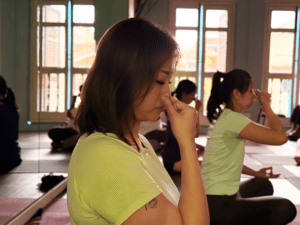
Alternate Nostril Breathing, or Nāḍī Śodhana Prāṇāyāma, is a prāṇāyāma technique traditionally practiced at the beginning of a yoga session.
- Benefits: Nāḍī Śodhana Prāṇāyāma regulates energy flow through the body, supporting nervous system balance. Practicing this yoga technique can reduce tension, improve concentration, and help the mind settle.
- How to Practice: Follow these instructions to perform Alternate Nostril Breathing.
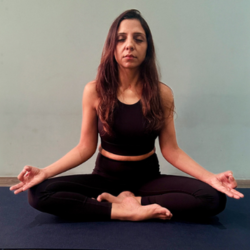
- Prepare: Sit comfortably with a straight spine, placing your left hand in your lap.
- Position Hand: Fold the index and middle fingers of your right hand toward the palm. Use the thumb to close the right nostril and the ring finger to close the left nostril.
- Begin the Cycle: Close the right nostril with your thumb, inhale through the left nostril. Then, close the left nostril with the ring finger, release the thumb, and exhale through the right nostril. Again, inhale through the right nostril, close it with the thumb, and exhale through the left nostril. This completes one full round.
- Breath Cue: Keep the exhale equal to or slightly longer than the inhale to encourage relaxation.
- Repeat: Continue for 2 or more cycles or for 10 minutes.
2. Seated Forward Bend (Paścimottānāsana)
After folding inward in poses like Seated Forward Bend, Fish Pose, or Matsyāsana, it offers a counter-movement that encourages the body to open and expand.
- Benefits: Fish Pose helps relieve tension in the chest and respiratory muscles caused by anxiety-driven posture habits. By expanding the throat and ribcage, the body encourages freer breathing, which can help release the subtle grip of grief or stress. In addition, this yoga posture strengthens the upper back, tones key glands, and supports a more upright posture.
- How to Practice: Follow these steps to practice Fish Pose.
- Set Up: Lie on your back with your hands placed under your hips for support.
- Lift the Chest: Inhale and press into your forearms to gently lift the chest, creating an arch in the upper back.
- Position the Head: Rest the crown of your head lightly on the floor, keeping minimal pressure on your neck for safety.
- Focus on Breath: Breathe deeply into the open ribcage, allowing the inhale to expand the chest and the exhale to release tension.
- Hold and Release: Maintain the posture for several breaths, then inhale to lift the head and chest, exhale to lower back down onto the mat.
4. Supported Bridge Pose (Setu Bandhā Sarvāṅgāsana)
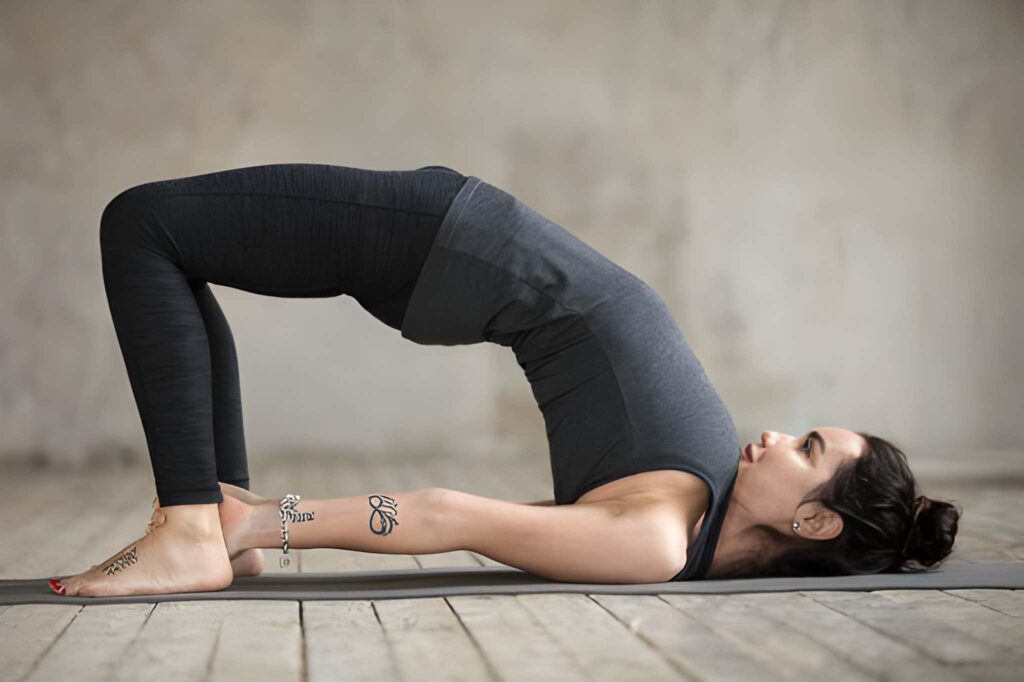
Supported Bridge Pose, or Setu Bandhā Sarvāṅgāsana, a traditional Hatha Yoga pose, provides a restorative lift that helps the nervous system settle.
- Benefits: This inversion yoga pose soothes the nervous system. Lifting the hips above the heart while supported opens the chest, shoulders, and hip flexors, helping release tension.
- How to Practice: The following steps will help you get into Supported Bridge Pose.
- Setup: Lie on your back with knees bent, feet flat on the floor, and heels close to your sitting bones.
- Lift & Support: Inhale to lift the hips slightly, then place a bolster or a yoga block (medium or low height) at the base of the spine.
- Adjust & Rest: Allow the hips to sink fully into the block. Keep your arms relaxed at your sides, palms up or down, or in a cactus shape.
- Focus on Breath: Breathe deeply into the chest and hips, letting the body soften with each exhale.
- Release: To come out, inhale and lift the hips slightly, remove the block, and lower the spine slowly, one vertebra at a time, onto the mat.
5. Half Lord of the Fishes Pose (Ardha Maṭsyendrāsana)
Half Lord of the Fishes Pose or Ardha Maṭsyendrāsana stretches the torso, helping the body release stored tension.
- Benefits: This seated twist neutralizes and elongates the spine, helping relieve stiffness caused by stress or prolonged sitting. The rotation massages the abdominal organs, stimulating digestive function that can slow down under stress. Additionally, the pose stretches the shoulders and torso and promotes spinal flexibility.
- How to Practice: Follow along to perform Half Lord of the Fishes Pose.
- Set Up: Begin seated with legs extended in Staff Pose (Dandasana).
- Fold & Position: Bend the right knee and place the foot on the outside of the left thigh, keeping the left leg extended or bent under the hip, whichever is comfortable.
- Twist: Inhale to lengthen the spine, and as you exhale, twist to the right. Hook the left elbow over the right knee while placing the right hand behind you for support.
- Focus on Breath: With each inhale, grow taller through the spine; with each exhale, deepen the twist gently without forcing.
- Hold & Release: Maintain the posture as long as it is comfortable, then slowly unwind and repeat on the opposite side.
6. Legs Up the Wall Pose (Viparīta Karāṇī)
Legs Up the Wall Pose, or Viparīta Karāṇī, reverses the usual effects of gravity, promoting nervous system balance.
- Benefits: Viparīta Karāṇī can help lower heart rate and support healthy blood flow back to the heart. Elevating the legs relieves tired limbs, reduces mild swelling, and encourages a calming response throughout the body.
- How to Practice: Here’s how to perform Legs Up the Wall Pose.
- Set Up: Sit sideways next to a wall, then gently lie back while swinging your legs up to rest vertically against the wall. Your hips can be directly against the wall or slightly away, depending on comfort.
- Position Hands & Body: Rest your hands on your belly or alongside your body, keeping your shoulders relaxed and your spine supported.
- Optional Support: Place a folded blanket or bolster under the hips or lower back for extra comfort and gentle elevation.
- Hold: Maintain the pose for 5 to 10 minutes, or for whatever duration is comfortable for you.
- Modify as Needed: If the hamstrings feel tight, move slightly away from the wall or keep the knees bent.
Guidelines for a Calming Yoga Practice
Simple adjustments to your yoga routine can enhance the nervous system’s ability to relax and respond to tension.
- Create a Sacred Space: Turn off phone notifications, quickly dim the lights, and remove distractions to allow the nervous system to settle and the mind to calm down.
- Focus on the Exhale: Make your exhalation slightly longer than your inhale. This signals the body to enter a calmer, more restorative state.
- Consistency Over Intensity: Practicing even 10 minutes of these yoga poses daily can be enough to calm the nervous system more than infrequent, longer sessions.
Find Your Calm at Rudrakshaa Yogashala
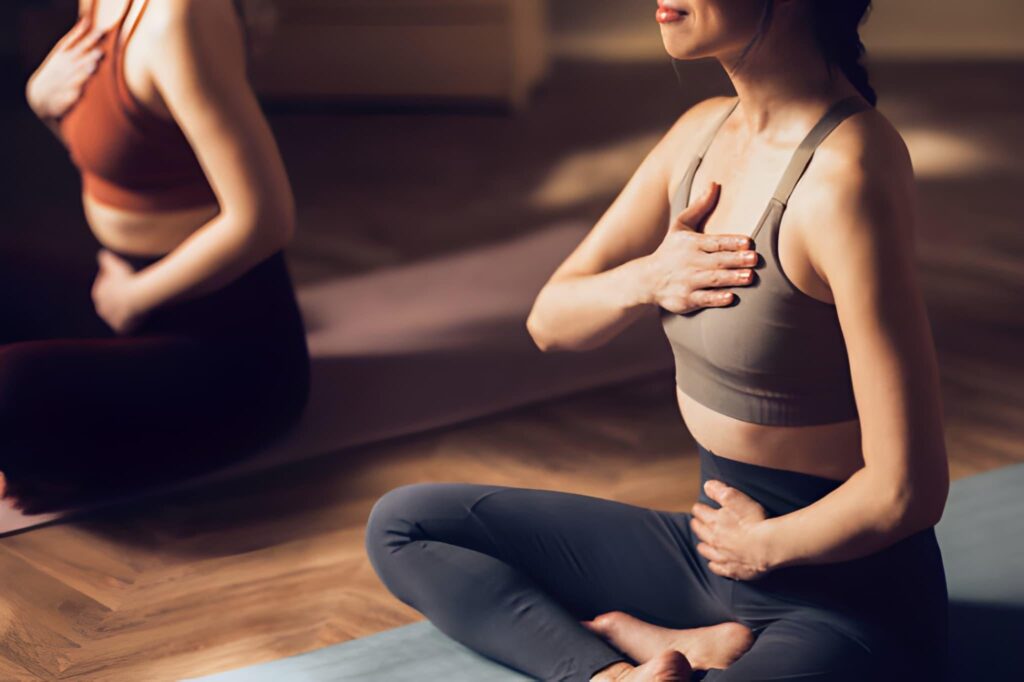
While these yoga poses may seem simple on the surface, it is best to practice them under professional guidance. This can amplify their calming effects on the nervous system and enhance stress relief in a peaceful environment.
At Rudrakshaa Yogashala, our Restorative Yoga and Hatha Fusion classes create the perfect atmosphere to unplug from city life and reconnect with your body and breath. For an added layer of calm, we also offer meditation classes in Singapore.
Take the next step toward serenity and join our yoga studio in Singapore.
Frequently Asked Questions
What type of yoga is best for stress?
Hatha and Restorative yoga are the most effective for stress because they emphasize slow, deliberate movement and long-held, supported poses. These styles prioritize the “quiet” aspects of practice, which help lower cortisol levels and move the body out of a constant “hustle” mindset.
How does yoga calm your body?
Yoga calms the body by shifting it from the sympathetic nervous system (fight-or-flight) to the parasympathetic nervous system (rest-and-digest). By combining physical stretching with rhythmic nasal breathing, you physically inhibit the production of stress hormones and lower your heart rate.
How do you reset your nervous system?
You can reset your nervous system through “vagal toning” techniques found in yoga, such as deep diaphragmatic breathing and chanting (like ‘Om’). These actions stimulate the vagus nerve, which acts as a biological “off-switch” for stress, bringing your body back to a state of equilibrium
What exercises calm the vagus nerve?
Gentle neck stretches, Humming Bee Breath (Bhramari Pranayama), and inversions like Downward-Facing Dog are excellent for the vagus nerve. Poses that involve a slight compression of the throat or deep, slow exhalations are particularly effective at triggering the relaxation response.
Is legs up the wall good for anxiety?
Yes, Viparita Karani (Legs Up the Wall) is one of the most powerful poses for anxiety. It uses gravity to assist blood flow back to the heart and brain, lowering blood pressure and signaling to the nervous system that it is safe to relax.
What does forward fold do for the brain?
Forward folds act as a “physical “introversion,” reducing sensory input and allowing the brain to quiet down. The slight inversion (head below heart) improves blood flow to the brain, which can clear mental “static” and help soothe an overactive amygdala.
How quickly does breathing calm the nervous system?
A significant shift can occur in as little as 60 to 90 seconds. By taking just five or six deep, slow breaths, you can measurably lower your heart rate and begin to reverse the physiological signs of acute stress or panic.
How can I calm my nervous system quickly?
The fastest way is through the “Exhale-Emphasis” technique: inhale for a count of 4 and exhale slowly for a count of 8. Extending the exhalation is the direct mechanical way to signal the brain to slow down the heart and relax the muscles.
How often should I do yoga for stress relief?
For long-term stress management, aim for 3 to 4 short sessions (20–30 minutes) per week. However, even a 5-minute stretching or breathing routine done daily can prevent the cumulative buildup of stress that leads to burnout in a fast-paced environment.