
Talk to any yoga teacher about where they trained, and it usually comes up quickly: how big the group was, whether they felt seen, and whether the lead teacher actually knew their name by week two. Batch size is one of those things that sounds like a minor logistical detail until you are in the middle of a training and realise it shapes absolutely everything.
There is a real difference between completing a yoga teacher training in Singapore alongside thirty other people and doing it alongside eight. Not just in the atmosphere, but also in the actual quality of what you learn and how prepared you feel walking out.
Does Class Size Really Matter in Yoga Teacher Training?
Here is the honest answer: more than most schools want to admit.
Yoga teacher training is not a lecture course where you sit, absorb information, and get tested at the end. The whole point is learning to teach, which means you need to be observed teaching, corrected while doing it, and given feedback that actually tells you something. That process takes time. Real-time, per student.
When a program has twenty-five people in it, the math works against you. Even in a full training day, each person might get a few minutes of actual teaching practice. A few minutes of feedback. One or two adjustments to their Warrior Two. That’s nothing, but it isn’t enough to make you a confident teacher.
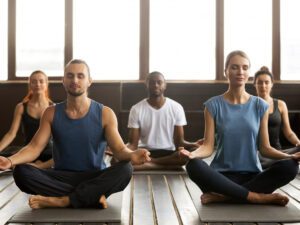
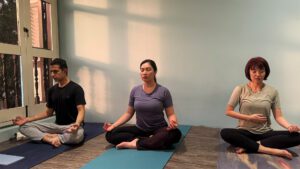
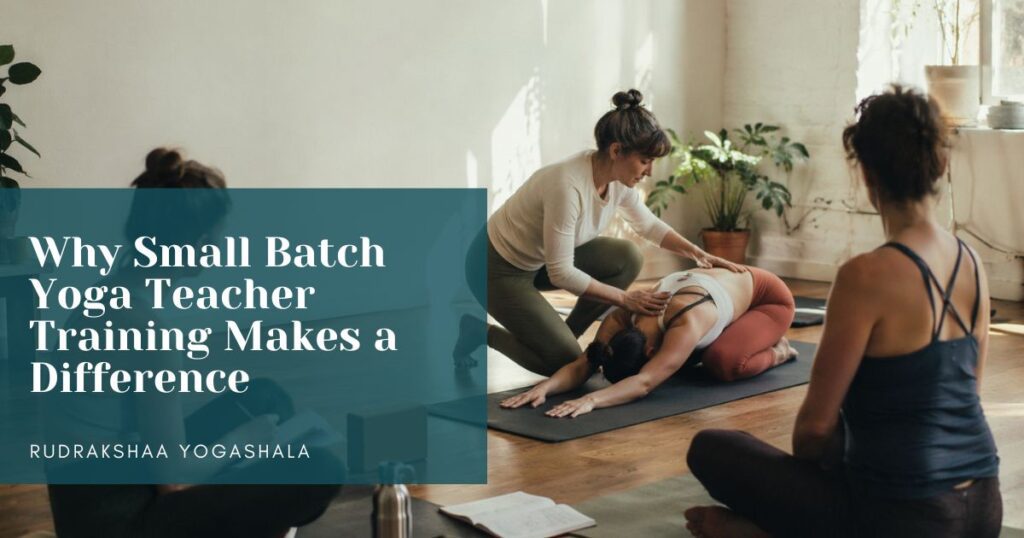
In a small batch yoga teacher training, eight, ten, or twelve students, the dynamic shifts entirely. The lead teacher isn’t managing the room; they’re working with individuals. They notice that one student always collapses in their lower back during forward folds. They catch when someone is cuing a sequence confidently but holding their breath while doing it. They can say something specific, not something general. That specificity is what changes people.
What Is Considered a Small Batch in Yoga Teacher Training?
There’s no official number; different schools set different limits. But within the yoga instructor training Singapore space, twelve students or fewer is generally where the experience starts to feel genuinely small. The most intentional programs cap at eight to ten.
Worth noting: some schools advertise small batches but quietly stretch the number when a cohort fills up faster than expected. It’s worth asking directly what the hard maximum per cohort is. Has it ever gone over that? If they hedge or redirect, that tells you something.
The gap between eight students and eighteen students in a teacher training isn’t a small rounding error. It’s the difference between a training that genuinely shapes how you teach and one that gives you a certificate to hang on the wall.
What Is the Difference Between a Small-Batch YTT and a Large Group Yoga Teacher Training?
You feel it in the first session, actually. Walk into a room of twenty-five people in training whites, and the energy is exciting but also diffuse. People are introducing themselves to strangers. The lead teacher is holding a crowd. Everything moves a little faster because it has to.
Walk into a room of nine people and something different happens. There’s nowhere to disappear. Which, if you’re the kind of person who tends to hang back, is exactly what you need.
In large cohorts, philosophical discussions have a way of becoming one person asking a question and the teacher answering it for the group. Asana adjustments get rationed; there are only so many hands and so many minutes. Teaching practice becomes a kind of performance in front of a large audience rather than a learning exercise in front of people who know you.
Small batch yoga teacher training in Singapore inverts this. Philosophy sessions become actual conversations. If something isn’t clear, there’s space to keep pulling at it until it is. Adjustments are made at every session because the teacher can reach you. And when you practice teaching, the feedback you receive is from someone who has been watching you for weeks, not someone trying to remember which face belongs to which name.
There is a community dimension to this, too. Training alongside eight or ten people for several weeks creates a closeness that doesn’t happen in larger groups. Those relationships tend to outlast the training – peer teachers, practice partners, people you continue to learn from for years afterwards. That’s harder to manufacture in a cohort of thirty. For a sense of what that kind of mindful, community-driven yoga practice looks like in Singapore, it’s worth reading about practitioners who have experienced it first-hand.
How Does Small Group Yoga Teacher Training Lead to Better Learning Outcomes?
Think about what it actually takes to become a competent yoga teacher. Knowing the poses is the easy part that comes from years of practice before training even begins. The harder skills are the ones that only develop through repetition: cueing clearly enough that a beginner can follow without looking at you, sequencing in a way that builds intelligently toward a peak pose, reading the room when energy drops and knowing how to lift it, adjusting someone’s alignment with your hands confidently and safely.
None of that gets learned from a manual. It gets learned by doing it, being watched while you do it, and getting pointed feedback immediately afterwards. In a small batch setting, every student gets substantially more of that loop, more teaching reps, more observation time, and more specific notes from the trainer.
Graduates from small-batch programs consistently leave with more actual classroom confidence. Not because they learned different content, but because they practised teaching more, received more precise corrections, and had the experience of growing under a teacher who actually knew them. You can feel the difference in a first class. So can their students. To understand the philosophical foundation underpinning this kind of teaching, exploring the difference between traditional and modern yoga gives useful context for why depth of transmission matters so much.
What Are the Disadvantages of Large Group Yoga Teacher Training Programs?
Large programs have genuine appeal. Some attract well-known teachers. The energy of a big cohort can feel exciting. There’s diversity in the room, different bodies, different backgrounds, different reasons for being there, which has its own value.
But the trade-offs are real and worth being clear-eyed about.
Individual adjustments get rationed when a teacher has twenty-five bodies to work with in a two-hour session. Teaching practice time shrinks per person as the cohort grows. Quieter students, and there are always quieter students, can slip through weeks of training without ever being truly stretched. And the philosophical content, which is some of the richest material in any yoga teacher training, tends to flatten out in large groups where there isn’t time for the kind of digressive, exploratory conversation where real insights tend to emerge.
There is also something subtler. In a big group, it’s easier to coast. To show up, go through the motions, and absorb just enough to pass the assessments. Small batch yoga teacher training doesn’t really allow for that; the accountability is too high, the attention too close. For most people, that pressure is exactly what they need.
The Lead Teacher’s Role in a Small Cohort
No discussion of batch size makes complete sense without talking about what it means for the lead teacher’s ability to do their job properly.
Great yoga teaching is inherently personal. It is about reading a student’s physical patterns, the way they engage with difficult concepts, what blocks them, what lights them up, and responding to what you actually see rather than what you expect to see. That kind of responsiveness is only possible when the teacher has enough time and proximity to each student to know them genuinely.
In a small batch yoga instructor training Singapore program, the lead teacher gets that. By week two, they know whose lower back tightens under stress and whose hip flexors have never fully released. They know who asks questions out of genuine curiosity and who asks them to deflect from doing the work. They know who needs encouragement and who needs challenge.
That depth of knowing is where the best mentorship comes from. And the best mentorship is what separates technically competent teachers from genuinely good ones. You can learn more about the teaching philosophy behind our approach on the About Us page.
Philosophy Sessions Are Different in Small Groups, and It Matters
This is one of the less-talked-about differences between small and large training cohorts, but practitioners who’ve experienced both tend to bring it up unprompted.
Yoga philosophy – the Yoga Sutras, the nature of the five kleshas, the relationship between pranayama and mental state, the ethics of teaching, is not material that benefits from being delivered as a lecture. It benefits from being wrestled with. Questioned. Related to personal experience. Followed wherever the conversation goes.
Understanding why breath control sits at the heart of yogic practice is one of those topics that only truly lands in a small group setting, where questions can be followed all the way through rather than moved past for the sake of the schedule. Similarly, the deeper dimensions of practice – from Kriya Yoga to the breadth of styles that exist across the tradition, are the kinds of subjects that open up in small groups in a way that larger cohorts rarely allow.
In larger cohorts, that kind of organic exploration rarely survives the pace. There’s too much material to cover, too many people in the room, too much ground to manage. The philosophy gets taught. It just doesn’t always get understood in the same way.
Questions to Ask Before You Commit
If you are seriously evaluating yoga teacher training in Singapore options, and small batch size is a priority, as it probably should be, here are the direct questions worth asking any school.
What is the maximum number of students in each cohort, and has that number ever exceeded? How many students are currently confirmed for the next training? How much dedicated teaching practice time does each student receive across the full program? What is the ratio of students to qualified teachers, including assistants? Can you speak with a recent graduate about their experience with the group size?
A school that is genuinely committed to small batches will answer these questions directly and specifically. Vagueness, redirection, or language about ‘intimate environments’ that doesn’t come with a number is worth probing further. You can also review our FAQ page for answers to the most common questions about how our training is structured, or view the upcoming schedule to see what’s currently available.
Why Rudrakshaa Yogashala Keeps Cohorts Small
At Rudrakshaa Yogashala, the decision to cap our yoga teacher training cohorts is not a marketing position. It is a conviction about what teacher training actually needs to produce, not just certified graduates, but people who can walk into a room and genuinely teach.
That outcome requires time with each student. It requires a lead teacher who knows the person, not just the student. It requires philosophy sessions that can follow their own logic rather than sticking to the schedule. None of that happens at scale.
If you are exploring yoga teacher training in Singapore options and want to experience what it feels like to train in an environment where every session counts and every student is genuinely seen, we’d welcome the conversation. Browse our upcoming events and workshops, drop into a regular class to experience the teaching environment first-hand, or get in touch directly. When you are ready to take the next step, submit your training enquiry here.
Frequently Asked Questions
Does class size really matter in yoga teacher training?
More than most people realise before they start training. Smaller cohorts mean more teaching practice per student, more precise corrections, and a lead teacher who can genuinely respond to the individual rather than the group. These factors directly shape how prepared graduates feel, and actually are.
What is considered a small batch in yoga teacher training?
Twelve students or fewer is where most practitioners draw the line. Programs that cap at eight to ten tend to produce the most individualised experience. Always ask for the specific maximum, not the average, not the ‘typical’ and ask whether it has ever been exceeded.
What is the difference between a small batch YTT and a large group yoga teacher training?
Almost everything, in practice. Feedback specificity, teaching time per student, depth of philosophical discussion, quality of adjustments, and the kind of community that forms. Both formats deliver the same credential. The preparation they provide is quite different.
How does small group yoga teacher training lead to better learning outcomes?
More teaching repetitions, more individual feedback, closer observation by the lead teacher, and more genuine engagement with the philosophical content. Graduates leave not just certified but actually ready to teach. That gap is visible from a teacher’s first few classes.
What are the disadvantages of large group yoga teacher training programs?
Teaching time per student is diluted. Adjustments get rationed. Philosophy sessions tend to flatten out. Quieter students can drift through without being stretched. And the subtle accountability that comes from being genuinely seen by your trainer, which is what pushes most people to their best, is harder to maintain in a large room.