
Choosing a yoga teacher training program is one of the more significant decisions a practitioner can make. It is not just a course, but a commitment of time, energy, and intention. With dozens of schools operating across the island, selecting the right yoga teacher training in Singapore requires more than scanning a list of prices or class schedules. It calls for a clear understanding of what genuinely makes a program worth your investment.
This guide covers what to look for when evaluating a yoga teacher training program in Singapore, from accreditation and curriculum to teaching methodology and studio culture, so that you can choose with confidence rather than guesswork.
Why Yoga Teacher Training Is More Than a Certification
Before diving into what to look for, it helps to be honest about what you are looking for. For some, yoga teacher training in Singapore is primarily about getting certified so they can start teaching. For others, it is a period of deep personal immersion in the practice. It is a chance to understand yoga from the inside out, not just as a physical discipline but as a holistic path.
The best programs serve both purposes at once. They prepare you to teach with confidence and competence while also giving you a genuine education in the philosophy, anatomy, and methodology that make yoga a meaningful practice rather than just another fitness class. If you are investing months of your life and a significant sum of money, that distinction matters.
Understanding Yoga Alliance Accreditation
One of the first things to look for in any yoga teacher training program is whether it is registered with Yoga Alliance, the internationally recognised body that sets minimum standards for yoga teacher training worldwide. A 200-hour yoga teacher training course in Singapore registered with Yoga Alliance qualifies graduates to apply for the RYT 200 designation, which is the baseline credential most yoga studios and employers look for when hiring teachers.
Yoga Alliance registration does not guarantee quality in every dimension, but it does mean the program meets established standards for contact hours, curriculum coverage, and teaching practice. Programs that are not registered are worth scrutinising carefully and asking why they chose not to pursue accreditation.
For those planning to teach internationally, choosing a Yoga Alliance-registered program of 200-hour yoga teacher training in Singapore also ensures that your qualification is widely recognised, not just locally but across studios in Australia, Europe, the United States, and beyond.
How to Pick a Yoga Teacher Training Program?
Once you understand what accreditation means, the next step is evaluating the specifics of each program. Here are the areas that matter most.
How Long Is a 300-Hour Yoga Teacher Training?
A strong yoga teacher training curriculum covers far more than pose sequences. Look for programs that give substantial time to pranayama and breathwork, yogic philosophy and the key classical texts, anatomy and physiology as they relate to yoga, teaching methodology and class sequencing, and hands-on practicum sessions where you practice teaching under guidance.
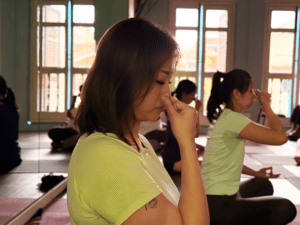
Understanding why breathing is central to yoga practice is one of the clearest indicators of whether a program treats yoga as a complete discipline or just a physical one. If the program’s brochure or website reads like a fitness syllabus without mention of philosophy, pranayama, or Sanskrit terminology, it may be prioritising marketability over depth. A genuinely comprehensive yoga teacher training in Singapore will treat the physical, philosophical, and pedagogical dimensions of the practice as equally important.
Batch Size and Student-to-Teacher Ratio
This is often overlooked but profoundly important. A small batch means more individual attention from the lead teacher, more opportunities to practice teaching with meaningful feedback, and a tighter community among students that can become a lasting professional network.
In a large group, it is easy to pass through a training without ever being individually corrected, guided, or truly seen. In a small-batch 200-hour yoga teacher training in Singapore, the teacher can track your progress, identify where you need support, and adjust their guidance accordingly. That kind of personalised attention is what separates a transformative training from a generic one.
Lead Teacher Experience and Background
The quality of yoga teacher training is inseparable from the quality of the person teaching it. Spend time researching the lead trainer. How many years have they been practising? Who were their own teachers? Have they received formal training in a lineage-based tradition, or are they largely self-taught?
The most effective trainers are not necessarily those with the most Instagram followers. They are teachers with a genuine depth of knowledge across philosophy, asana, pranayama, and pedagogy, teachers who have spent years not just practising yoga but studying its roots, understanding its texts, and developing their own relationship with the practice at a level that allows them to transmit it meaningfully to others. You can learn more about the philosophy and experience behind our teaching approach on the About Us page.
Teaching Practice and Feedback Structure
Good yoga teacher training programs place enormous emphasis on practicum, the actual act of teaching, observed and reviewed. Ask how much time in the training is allocated to student-led teaching sessions, how feedback is delivered, and whether there is a structured process for helping trainees develop their teaching voice.
This is where the difference between a classroom education and professional preparation becomes clear. Being able to demonstrate poses correctly is one skill. Being able to sequence a class, cue students safely, adapt to different body types, and hold the room with clarity and calm is another set of skills entirely. Those skills develop through practice, not just passive learning.
Which Certificate Is Best for Yoga Teachers?
The Yoga Alliance RYT 200 is the most widely recognised entry-level certification for yoga teachers globally. It is what most employers, studios, and wellness platforms look for when considering new instructors. For those planning to continue their education, the RYT 200 is also the foundation upon which advanced certifications, the RYT 500 and beyond, are built.
Beyond Yoga Alliance, some programs offer certifications aligned with specific traditions or styles, such as Iyengar, Ashtanga, or Yin yoga. These are valuable for teachers who want to specialise, but they are typically pursued after completing a broader 200-hour yoga teacher training in Singapore.
What Is the Difference Between YTT and RYT?
YTT stands for Yoga Teacher Training; it refers to the course or program you complete. RYT stands for Registered Yoga Teacher; it is the designation you receive from Yoga Alliance after completing an accredited YTT and registering with them. In short, completing a yoga teacher training in Singapore gives you the training; registering with Yoga Alliance gives you the credential.
It is worth noting that registration with Yoga Alliance requires completing a Registered Yoga School (RYS) course, logging your training hours, and paying the registration fee. The process is straightforward, but it does require that the school you trained at was itself registered with Yoga Alliance.
Is RYT 200 Enough to Teach Yoga?
For the majority of teaching roles – studio classes, corporate wellness programs, private sessions, community classes, and online teaching – yes, an RYT 200 is sufficient to begin teaching professionally. Most yoga studios in Singapore and internationally recognise the RYT 200 as the standard minimum qualification for yoga instructors.
As you gain experience and identify areas where you want to deepen your teaching, you may pursue continuing education modules or eventually a 300-hour advanced training, which, combined with your RYT 200, qualifies you for the RYT 500 designation. But for getting started and building your teaching practice, a well-completed program of 200-hour yoga teacher training in Singapore is the solid foundation you need.
Is 40 Too Old to Become a Yoga Teacher?
Not at all. Yoga teaching has no age ceiling, and in many respects, life experience is an asset in the classroom that younger teachers are still developing. Students frequently connect more readily with teachers who carry genuine maturity, self-awareness, and calm authority, qualities that tend to deepen with age.
Physical flexibility does not need to be exceptional. What matters in a yoga teacher is the ability to guide, observe, adjust, communicate, and inspire, none of which are age-dependent. Many of the most respected yoga teachers worldwide began their teaching journey later in life, and the depth they brought to the practice was richer for it.
What to Look for in a Studio Environment
The environment in which you train shapes your experience considerably. A studio that treats its training programs as a business primarily tends to feel different from one that treats them as a genuine vocation.
Look for studios that are transparent about their curriculum and faculty, willing to answer specific questions about batch sizes and teaching hours, and whose overall approach reflects a genuine commitment to authentic yoga rather than just certifying bodies quickly. If possible, attend a public class at the studio before enrolling in their training; it is one of the most reliable ways to assess whether the teaching environment suits you.
Making the Right Choice for Your Yoga Journey
Selecting the right yoga teacher training in Singapore ultimately comes down to aligning your personal goals with a program that can genuinely meet them. Whether you are looking for a rigorous philosophical education, a deeply transformative personal experience, or a solid professional foundation for a teaching career, there is a program in Singapore that can offer what you are looking for.
Take your time, ask specific questions, attend trial classes where possible, and trust your instincts. A yoga teacher training should feel right – not just on paper but in the room, with the teacher, and in the quality of attention given to every student who walks through the door.
At Rudrakshaa Yogashala, our 200-Hour yoga teacher training programs in Singapore are designed to develop teachers who understand the full scope of yoga, from breath and alignment to philosophy and pedagogy. If you are ready to take the next step, we welcome your enquiry.
Frequently Asked Questions
How do I pick a yoga teacher training program?
Start by clarifying your goals, personal development, professional teaching, or both. Then research accreditation (look for Yoga Alliance-registered programs), evaluate curriculum depth, examine batch sizes, and research the lead trainer’s background and experience. If possible, attend a class at the studio before enrolling.
Which certificate is best for yoga teachers?
The Yoga Alliance RYT 200 is the most universally recognised credential for yoga instructors. It is accepted by most studios, wellness platforms, and employers globally and serves as the foundation for further certifications.
What is the difference between YTT and RYT?
YTT is the training program itself. RYT is the Yoga Alliance designation you receive after completing an accredited YTT and registering your hours. You complete the YTT first, then apply for the RYT credential.
Is RYT 200 worth it?
For anyone planning to teach yoga professionally, even part-time or on a community level, the RYT 200 is a worthwhile investment. It provides the curriculum depth, professional credibility, and foundational knowledge to start teaching with confidence.
Is 40 too old to become a yoga teacher?
Absolutely not. Yoga teaching values wisdom, patience, and observational skill over age or physical performance. Many teachers find their most authentic and effective teaching voice after years of personal practice and life experience.
What is the highest level of yoga certification?
A 500-hour certification (RYT 500/E-RYT 500) is generally the highest level of certification under Yoga Alliance.